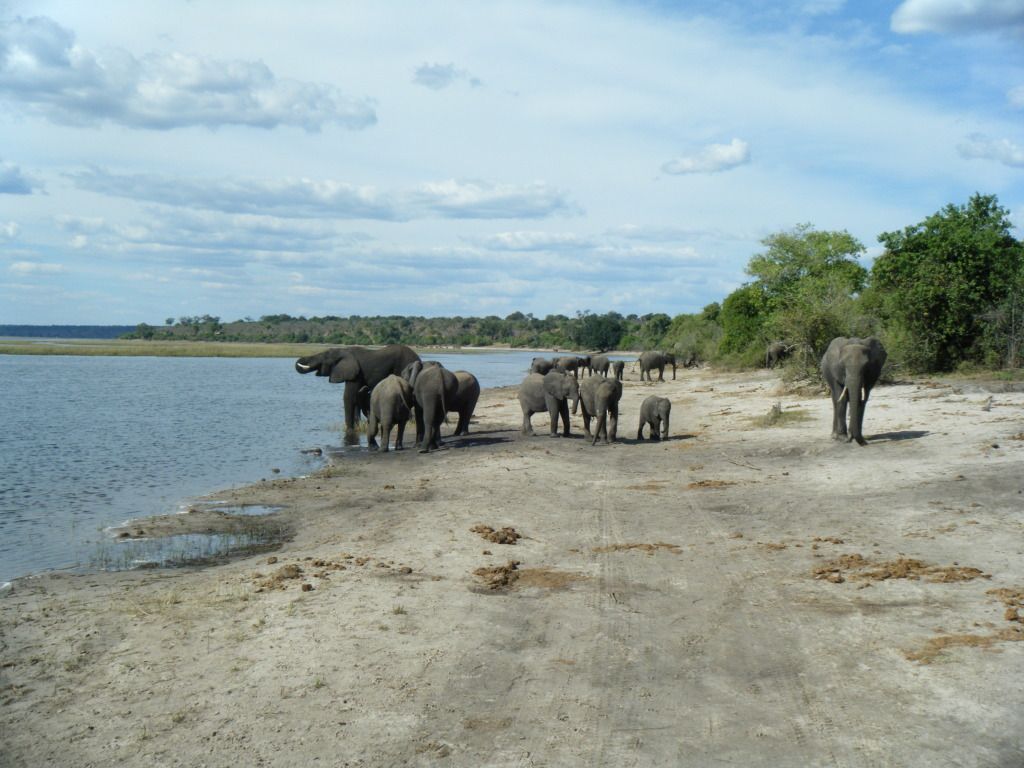
| elephants' paradise - scene by the chobe river |
Thursday, March 15, 2012
In Elephant Backcountry
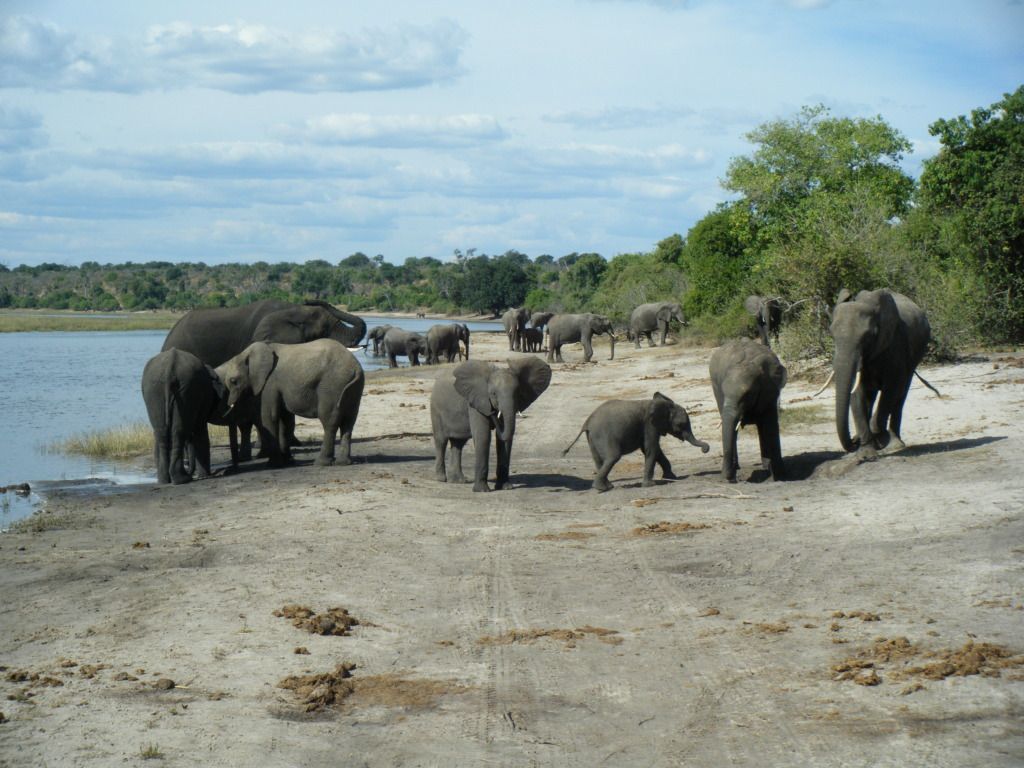
There are very few things I enjoy more on my travels than going on a game safari in Africa. Come to think of it, there are few things I enjoy more in life than that. You never know what you are going to see or happen on a game viewing activity so it is a different experience every time. The Chobe National Park in northwest Botswana was one of the game reserves that I visited during my Cape to Vic camping trip. It has one of the largest concentrations of game in Africa with an estimated 50,000 elephants, perhaps the highest elephant population of Africa. Damage caused by the high numbers of elephants is rife and apparent in some areas. We stayed in a nearby campsite and visited the park twice that day - once on a vehicle in the early afternoon and again in the late afternoon for a Chobe River sunset cruise. The first visit was on a big truck (not the usual 4X4) modified for game viewing and the tall vehicle was ideal here since it took us almost face to face level with adult elephants which I thought really enhanced the experience.
The late afternoon river cruise was even more rewarding than our earlier visit. The spacious slow ferry was able to cruise so close to the river bank where wildlife was in abundance. I also noticed that there was plentiful of bird life along the banks and I even got my first sighting of the majestic African Fish Eagle. Further from the river bank, there were scatter groups of hippos, one of the most dangerous animals in Africa. And of course, many more elephants were spotted in the water and along the river bank. What made the cruise so special and memorable was that it brought us insanely near the action - like for a while, we were barely a few meters from two adult elephants feeding in the water. The sun began to set as we turned back to the way of the jetty. So this great day at the Chobe National Park was capped by yet another beautiful African sun set...
Saturday, February 4, 2012
Looking Down the Devil's Throat
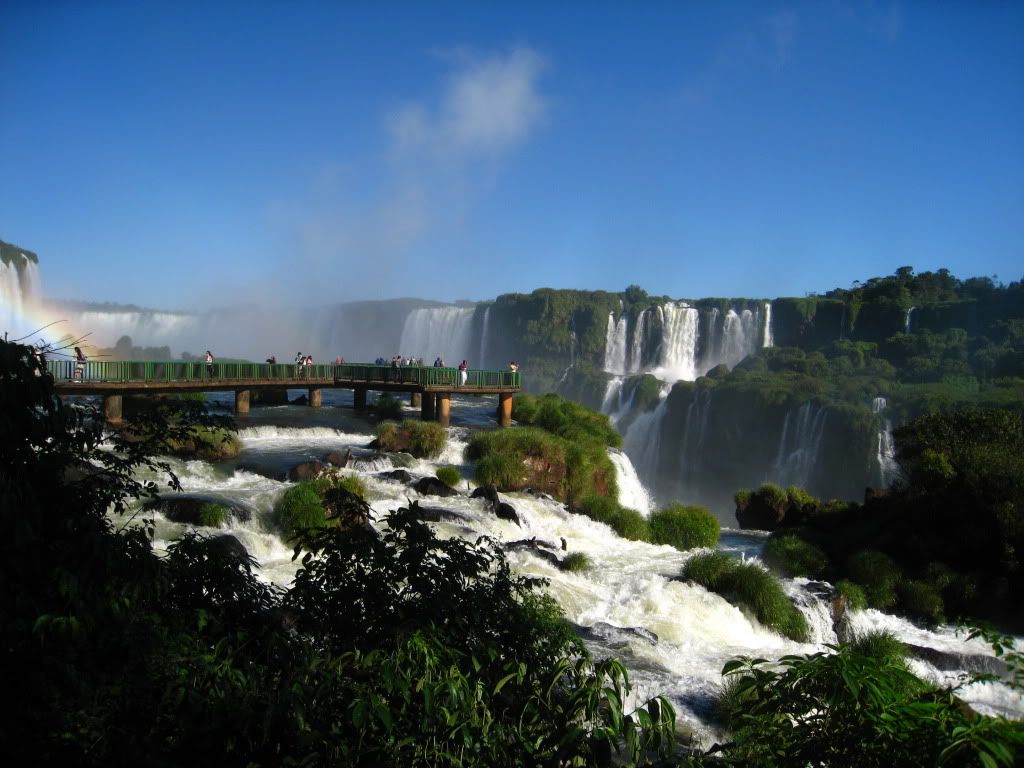
It has been six months since I wrote about my amazing flight into the Iguazu Falls and I thought it was long overdue to share the pictures of the rest of my visit here. With more than 250 separate cascades, varying between 60m and 82m high at heights and spanning 2.7km (1.7 mi), the Iguazu Falls is one of the largest waterfalls in the world. Based in Puerto Iguazu Argentina, I started off by spending an afternoon on the Brazilian side (Foz do Iguaçu) of the falls. The Parque Nacional do Iguaçu is designed in such a way that with every twist of the path reveals a more splendid view as you edge closer to the Devil's Throat (Garganta do Diabo in Portuguese) - an extended platform leading to the edge of the falls. Since 80 percent of the falls is in Argentina, the overview here, the river and the jungle below is nothing short of spectacular. There is an ever-present rainbow from all the moisture. To think that at one point, I was about to give up crossing over because of some problem with my visa application and if I did, that would be a real shame.
There are two trails - an upper and lower trail at the Parque Nacional Iguazú in Argentina. I did the upper trail first and it was built mainly on the falls offering some stupendous vistas of the falls. The the lower circuit involved much more climbing, but was even more beautiful. The lower trail is prettier from a nature standpoint. It does not get as close to the falls, but gives better views. After completing both trails, it was time for me to go to the Devil's Throat (Garganta del Diablo in Spanish). A kilometer-long trail leads directly to the falls of the Devil's Throat, the highest and deepest of the falls. The part with the largest volume of water is the narrow horseshoe of the Devil's Throat and it is also the portion that is split between Argentina and Brazil. The Garganta is something that pictures just cannot capture nor do justice with. The main falls are thunderous. Water tumbles off of them and smashes onto the rocks below with such force you cannot even see the bottom through the violent mist. Downstream, smaller falls are arguably even more beautiful.The trail takes you as close as you would want to be, occasionally being misted into oblivion by shifting winds. I am struggling for words to describe this feeling...
| the devil's throat in brazil |
Thursday, January 12, 2012
Old World Charm
I like to observe and photograph traditional old buildings and architectural works. Recently while in South Korea, I had the opportunity to stay and visit some of the hanok or traditional home villages. My first experience was the protected historic housing district of Samjicheon Village in Damyang. Although it is not a big or extensive village, it is certainly the one I find most appealing and worth every effort to get there. The hanok that I stayed in was tucked inside a charming alley lined by stacked-stone walls - a perfect illustration of the idyll of country life. I was lucky to arrive just before the sun set - excellent natural light condition for photography of the autumn colors. I opted for a slightly pricier room that came with ondol or traditional heating system where firewood are placed underground beneath the room. That evening, I was also invited to attend a traditional tea ceremony hosted by the friendly hanok owner and his wife.
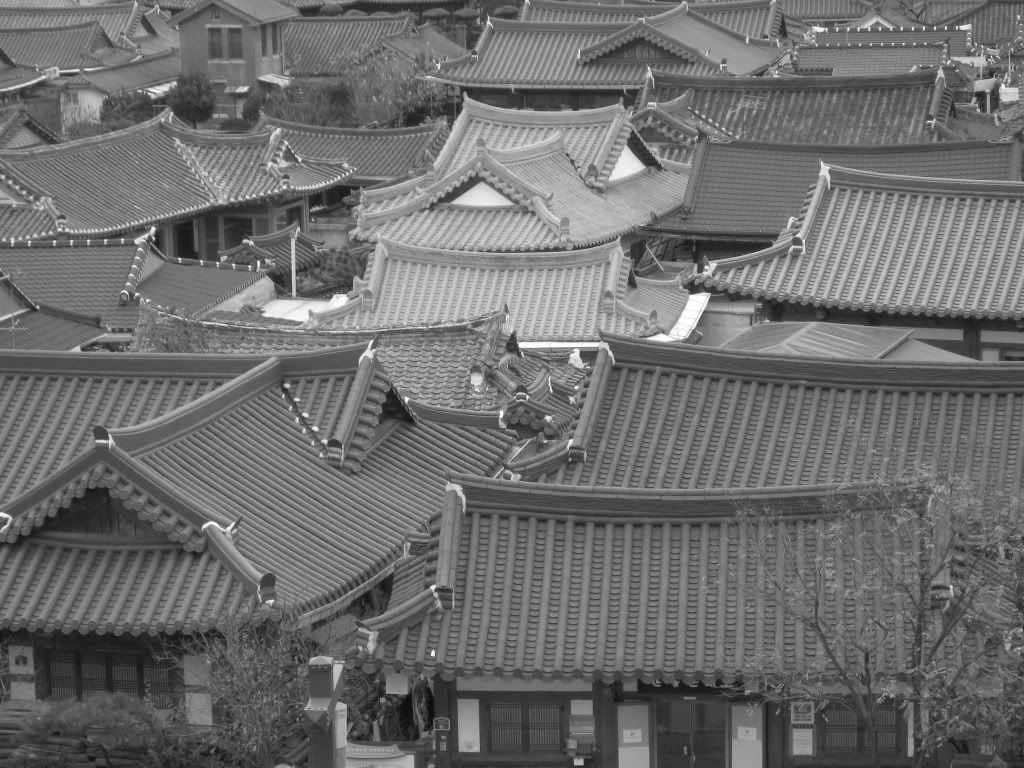
With over 700 traditional Korean hanok houses, the Jeonju Hanok Village in the city of Jeonju is the largest hanok village in Korea. There are traditional culture learning centers such as art crafts exhibition halls, master products exhibition centers, Hanok Living Experience centers, traditional alcohol museum and others. Many traditional and historic sites like the Gyeonggi Palace and Jeondong Catholic Church are excellently preserved. There are also tea shops and restaurants but what fascinates me is the high number of western styled cafes that are housed in hanok found here. There is a big cafe culture in Korea and the village has not been spared of that and unlike some of the older local folks that I have spoken to, I quite fancy the bit of old and modern mixed here.
| unique roof shape of jeonju hanok village |
With over 700 traditional Korean hanok houses, the Jeonju Hanok Village in the city of Jeonju is the largest hanok village in Korea. There are traditional culture learning centers such as art crafts exhibition halls, master products exhibition centers, Hanok Living Experience centers, traditional alcohol museum and others. Many traditional and historic sites like the Gyeonggi Palace and Jeondong Catholic Church are excellently preserved. There are also tea shops and restaurants but what fascinates me is the high number of western styled cafes that are housed in hanok found here. There is a big cafe culture in Korea and the village has not been spared of that and unlike some of the older local folks that I have spoken to, I quite fancy the bit of old and modern mixed here.
Friday, December 2, 2011
Mystical Miscanti
| this would have been perfect if my camera came with wide-angle lens |
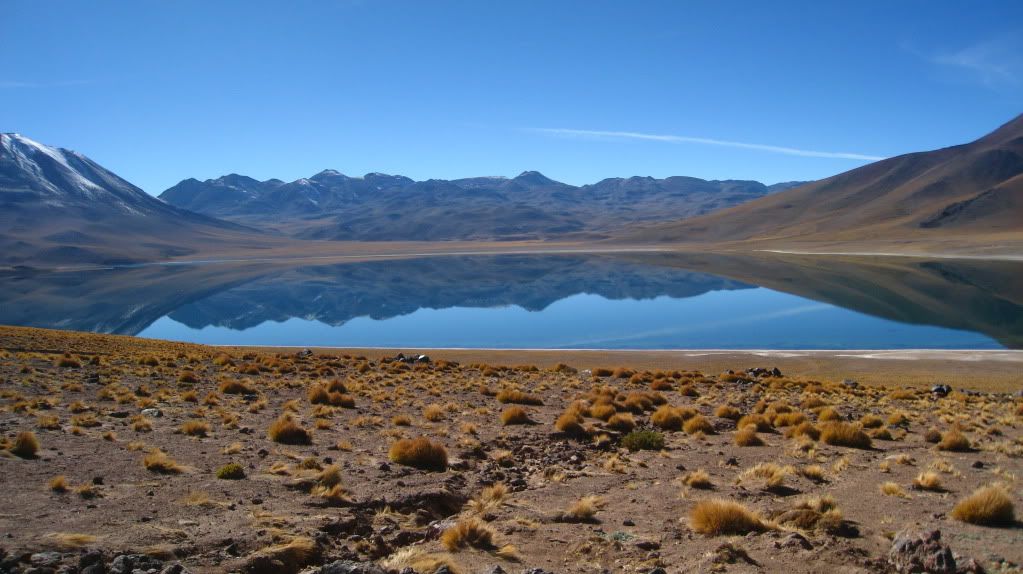
At a dizzying height of more than 4200m above sea level, nestled in the Andes lies another mezmerizing sight looking like an abstract painting. The two shimmering blue lagoons doted over by volcanos are simply gorgeous, and typical Andean scenery. The Miscanti is the bigger and more imposing of the two with visible snow on the volcano. Significantly smaller but just as alluring is the Miñiques. The lagoons are nesting sites for birds so we are not allowed to walk outside the designated area and path. This area is also a good place for spotting vicunas, Andean foxes and other wildlife.My Day 4 (final day in Atacama) tour concluded with a visit to the prehispanic village of Toconao - a sleepy town with a narrow plaza and a small church.
Tuesday, November 1, 2011
The Other Acropolis
Recently a co-worker brought up the subject of traveling in Greece and she told us how her friend was looking forward to see the iconic Acropolis in Athens. It prompted me to write and share my photos on my visit to Rhodes (Rhodos) last year. Closer to Asia Minor than to the Greek mainland, Rhodes is the largest of the Dodecanese islands in terms of both land area and population. I stayed in a simple but lovely hostel at the heart of the medieval Old Town. It is one of the oldest inhabited medieval town in Europe and I easily spent an entire day visiting the sites around this ancient walled city. Another good way of seeing the Old City is just by walking around the outside. The fortification has a series of well-preserved gates and towers, and is remarkable as an example of a fully intact medieval structure.
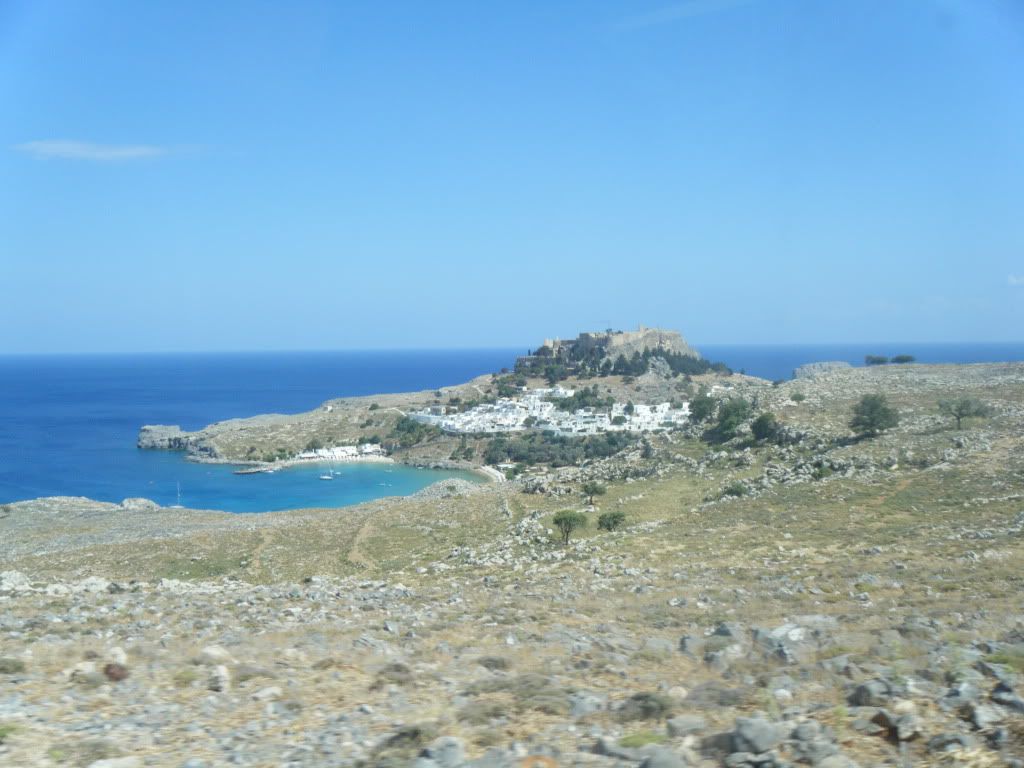
The town of Lindos, 45 km to the south of Rhodes town, is a beautiful little village of white cubist house and winding cobblestone streets at the foot of a vertical rock that is crowned by the Acropolis of Lindos. Before I read up for my visit to Greece, the only acropolis that I knew of was the iconic Acropolis of Athens. Having seen both, I think the Acropolis of Lindos is by far more picturesque from a distance and from the ruins itself because facing the sea, it offers dramatic views of the surrounding harbors and coastline. And on the day of my visit, it was for free admission to the public. I should be so lucky.
| acropolis of lindos pic taken from a bus |
Saturday, October 1, 2011
Reflection
Suspended effortlessly and drifting in a lake surrounded by the mesmerizing Andes and desert, it almost felt like a dream. The Laguna Cejar is another quirky place in the middle of the Salar de Atacama with 40% salt content, so if you attempt to swim in it you will float, just like in the Dead Sea. It has actually a higher salt content than the Dead sea, which has about 33.7% salt. Oddly, the water was freezing near the surface but warm closer to the bottom and I later found out from my guide that it was due to the very high lithium contents. After rinsing off, we drove to nearby Ojos del Salar - two perfectly round sink holes with fresh water. It was too cold to swim by then but they made quite good photos with the Andes.
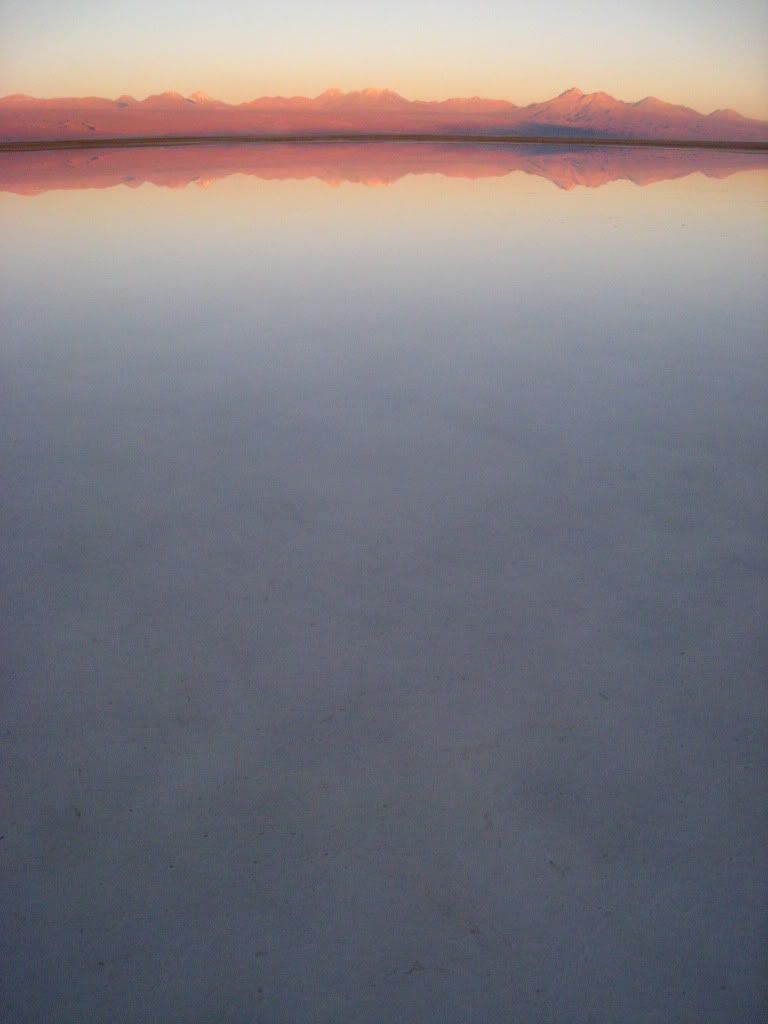
Saving the best for the last, the finale of my Atacama Day 3 tour was the surreal Tebenquiche salt lake. The water was perfectly still and just about a couple of inches high over the salt pan, creating one of the most breathtaking reflection scenery I have ever seen. Tourists amused themselves by posing on the salt flat to take reflecting photos and soon I found myself doing the same. As the sun set, the mountain range incredibly shed shades of scarlet, gold, orange then purple producing spectacular reflection photography opportunities. What a place to drink pisco sour and watch the sun down... what a place.
| reflection |
Saving the best for the last, the finale of my Atacama Day 3 tour was the surreal Tebenquiche salt lake. The water was perfectly still and just about a couple of inches high over the salt pan, creating one of the most breathtaking reflection scenery I have ever seen. Tourists amused themselves by posing on the salt flat to take reflecting photos and soon I found myself doing the same. As the sun set, the mountain range incredibly shed shades of scarlet, gold, orange then purple producing spectacular reflection photography opportunities. What a place to drink pisco sour and watch the sun down... what a place.
Thursday, September 8, 2011
Me Encanta Buenos Aires
When traveling, I do not usually linger around the big cities or gateways longer than I need to, preferring to move on quickly. Since I live and work in a high-strung society and city most of my life, my trips are also in some way a retreat for me. So I was pleasantly surprised at how much I have taken to Buenos Aires when I visited South America for the first time. Despite being the capital federal of Argentina and second largest city in S America, it did not give me a big city feel that I tend to shun. I spent more than a week (non-consecutively) there and found the Porteños to be friendly, patient and laid back. BA was my point of entry and I stayed in San Telmo for one night before leaving for Salta early next morning. Although heavily jet-lagged, I nevertheless enjoyed a leisurely afternoon stroll at the famous Sunday flea market of San Telmo. What I find alluring about BA are - interesting as they may be - not the sights like La Boca or the Recoleta Cemetery but the different neighborhoods or barrios that do not really have any particular tourist attractions. Palermo is a residential barrio of parks filled with pines, palms, and willows, where families picnic on weekends and couples stroll at sunset.
One of its sub-barrios, Palermo Viejo is very popular among visitors for its bohemian vibe and trendy shops, cafes and restaurants. Which brings me to the subject of wine and dine in BA and it is what I like most about this city. In fact, my best meal of the trip was at a restaurant called La Cabrera in Palermo. The sirloin steak or bife de chorizo there was the best that I have ever had. It was Argentine beef grilled to perfection and served with various side dishes and sauces and the Malbec recommended by the helpful waiter was great with it. Best of all, unlike back home or most western industrialized countries, dining in style in BA is extremely good value. BA is not just great for the fine dining, I stumbled upon one those no-frills diners right next to the Retiro subte or subway station that served good parilla, wine and other local food. Another good find was a Peruvian restaurant Chan Chan in the Microcentro. The ceviche there was very popular and rightly so too. But the thing I found most irresistible was the chocolate blanco latte (white chocolate latte) at the Havanna cafe - divine... I was also lucky enough to be there during the Anniversary of the 1810 May Revolution and Paraguayan Bi-Centennial Independence. On both occasions, streets in the Microcentro were closed to traffic for a carnival filled with street performers and vendors. Hasta luego Buenos Aires.
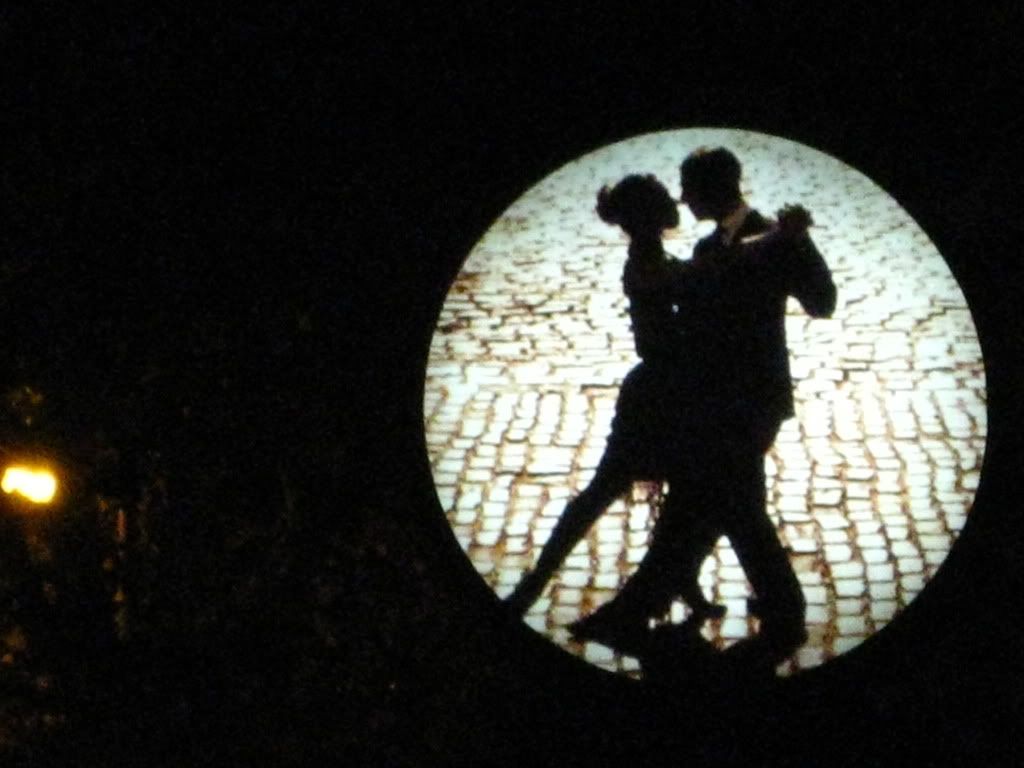
| a lighted sign along avenida de mayo |
Thursday, August 18, 2011
Geysers and Hot Springs
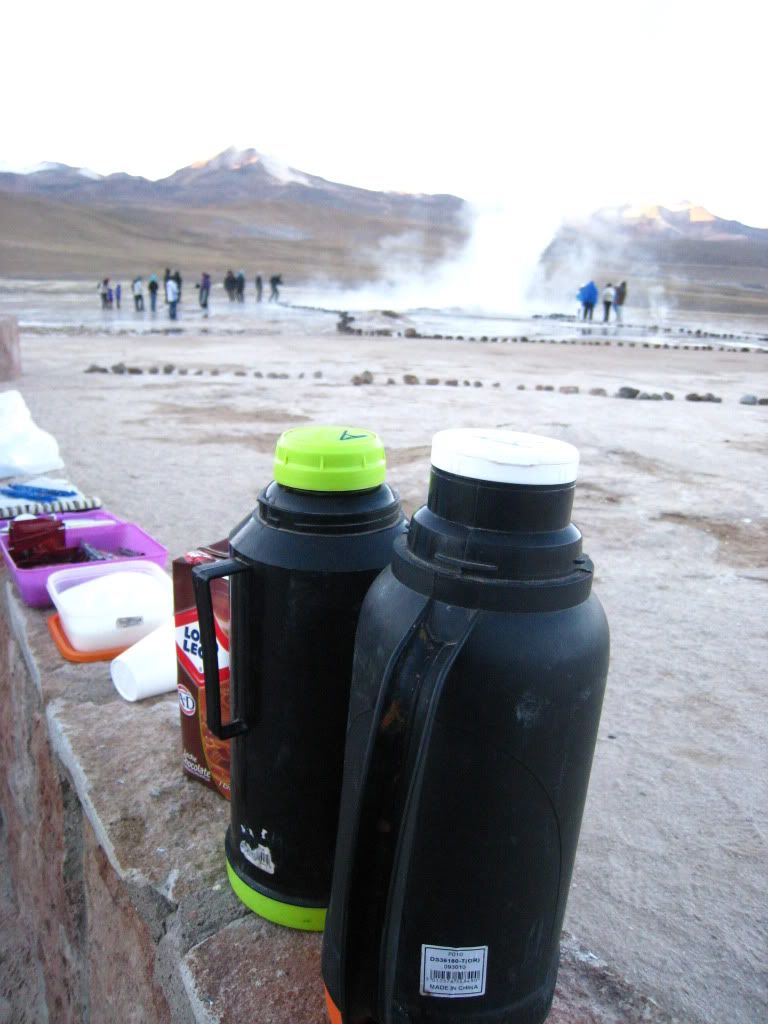
It was 4:30am and we were already on our way to the Tatio geysers - the highest (4200m) geothermal field in the world located 89km of San Pedro de Atacama in the Andes mountain range. We set off at this ungodly hour to catch the early morning fumaroles activity produced by the high temperatures of its watery craters. However, being at such a high altitude at such an early hour meant that it was terribly cold so I suffered a bit. The scenery here reminds me of how it must have been when the earth was first created. The ground hisses and belches out steam and strange odors. With all the steam around, coupled with the stark landscape in an arena of thermal pools and volcanoes, the atmosphere is rather bleak in the early hours.
After a light breakfast, we went for a dip in a thermal pool. I found it a little chilly but it was warmer in some places. The soak was really invigorating and we were ready to move on. We drove along the Putana River and passed by some stunningly beautiful river view especially where we stopped to take pictures. It was post-card perfect, teeming with bird life and majestic snow-capped mountains afar in the background. Next, we dropped by an Atacameno village, Machuca which is set in a ravine. The tour concluded with a quick stop at the cactus valley on the way back to San Pedro de Atacama.
| breakfast at the geysers |
Subscribe to:
Posts (Atom)