Sunday, May 1, 2011

Waka Waka - South Africa

Shortly after we had entered Namibia overland, my new Korean friend turned to me, 'Hey, now it's really starting to feel like Africa.' I could not have agreed with him more. After spending a couple of days in Cape Town and a few more camping in the Cederberg Mountain Region and Gariep (Orange) River, it was the first time on the trip that I felt the real sense of Africa.

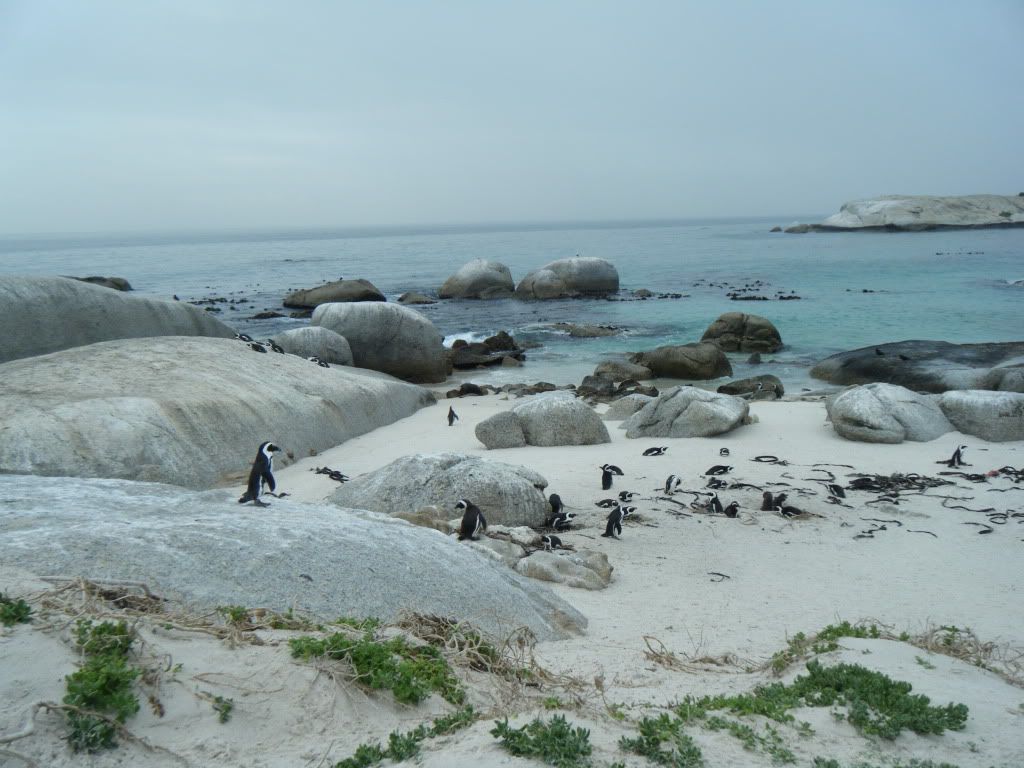
boulders beach

Do not get me wrong, I like South Africa. It is without doubt, a premier travel destination in Africa with some amazingly beautiful scenery and top-class game parks. It is also an ideal jumping-off point to the rest of the Southern African nations. But the further up north I went, the more it felt like the 'real Africa' to me. I think it was partly due to the changes in the terrain and color of the land as we traveled north and the frequent sightings of wildlife at places where I least expected to in some of the other countries. It was common to see springboks and to a lesser extent, giraffes, ostriches, oryxes and other antelopes all over Namibia. In Botswana and Zimbabwe (near Victoria Falls) elephants were surprisingly spotted on and off the paved roads. I even saw an elephant one evening in the middle of the town of Victoria Falls. In S Africa, outside the parks and game reserve, wildlife - with the exception of baboons - were not seen.

Friday, April 1, 2011

3D2N at the Delta

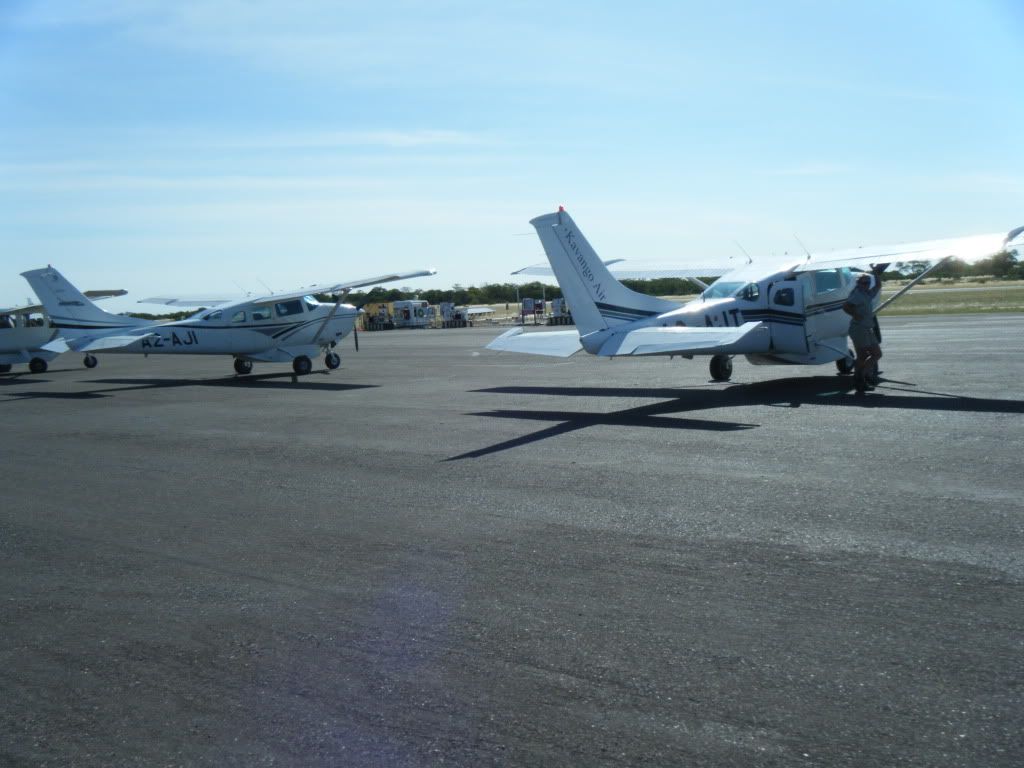
Maun, Botswana - the gateway to the Okavango Delta and that was where we stayed for a night to prepare for our bush camp in the Delta. That afternoon, along with other campers, I was driven to the local airport for a scenic flight. I was looking forward to it partly because I had never been on a small propeller plane (6 seater including pilot) before and of course, it was a flight over THE Okavango Delta. The Delta is truly a unique ecosystem: a delta in the middle of the Kalahari Desert. Each January, rains in the Angolan Highlands flow south-east along the Okavango River into Botswana. The water does not reach any sea or ocean. Instead, when it reaches a flat, depressed area of around 15,000 sq km, it simply washes across a vast floodplain. Here, dammed by two fault lines, it backs up and creates a swamp. For any traveler, it has to be one of the ultimate safari destinations and few remaining places to witness nature wild Africa. The 45 minute scenic flight got off well and the aerial view was amazing and wildlife, mainly the larger ones like elephants and giraffes could be easily spotted. After some time, I began to feel a bit of nausea and headache which is a common sign on this kind of flight but that did not mar the experience and I thoroughly enjoyed it.

where's my ride?
Next morning, took the mokoro (traditional canoe) through the waterways, we entered deep into the Delta. Going with the flow, soundlessly gliding among the reed beds and water lilies of a pristine wilderness. After almost 90 minutes, we finally arrived at the spot where we would be putting up our tents. For the next 2 days, there was really not much to do except for nature walks led by our mokoro polers in the morning and late afternoon. It gave us a rare opportunity to view wildlife up close in the open, not from the inside of a vehicle. Personally, I was a little apprehensive about that, after all we were in lion country and none of the guides were armed. In the end, no lions were sighted and instead we saw other game like zebras, buffaloes, wildebeests and giraffes. The bush camp was an incredible experience indeed. Apart from the bottled water that we brought for drinking, water for all other purpose including cooking, making beverages and washing were taken from the Delta. I even had a go at poling a mokoro and it was definitely more difficult than it looked. Answering to the call of nature after dark was particularly daunting, picture this - temporary dug-in toilet in the bush some distance from our camping area (for obvious reason) with a lit candle next to it for easy locating, when predators are most active. On our last evening, we took the mokoro out to a great spot for the sunset. It must be one of the most serene moments so what more could I have asked for? ... A hot shower perhaps....
Wednesday, March 2, 2011

A Lesser Known Greek Island II

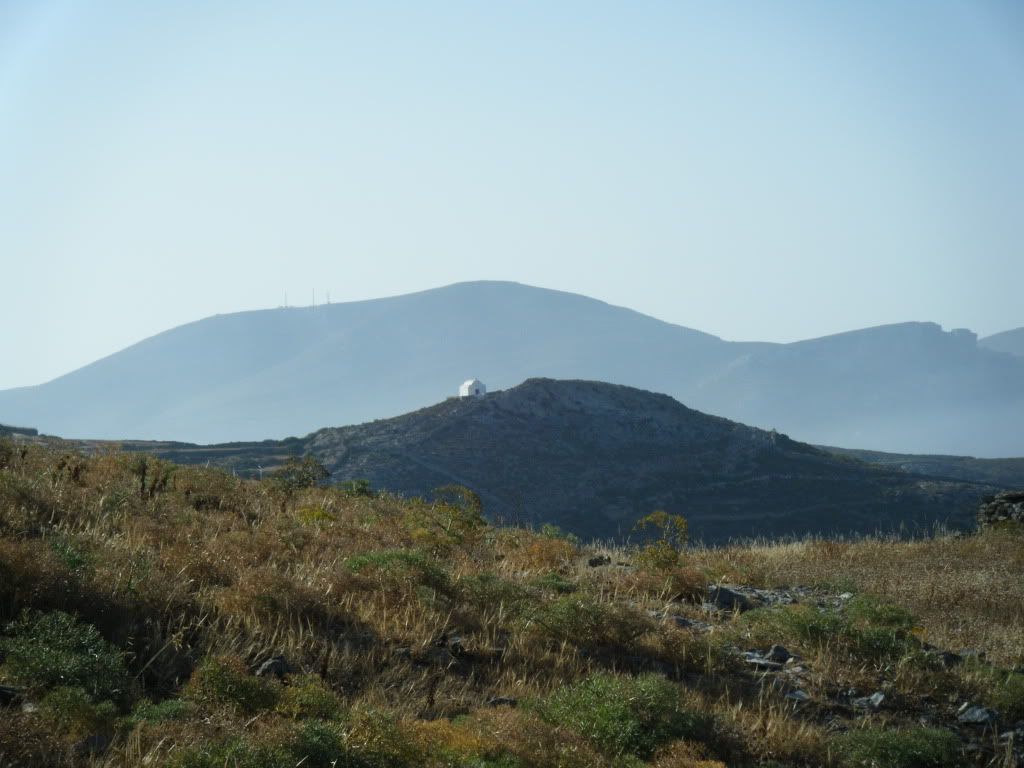
On my second day in Folegandros, I took the early bus to Ano Meria - a scatter community of small farms and houses that stretches for several kilometers. This is traditional island life, untouched by tourism and life quietly wanders off sideways. Using the paved road, I walked back to the Chora and was rewarded with some excellent cliff top views of the coastline.

view from ano meria

Once back at the Chora, it was lunch before heading out to the Panagia. A steep path leads up to the church of Virgin Panagia, which sits perched on a dramatic cliff top above the town. I did not see anyone on my way up so unsurprisingly, there was nobody in the vicinity of the church. As I wandered around, I discovered that parts of the church building structure were actually steps, enabling one to easily climb to the top of the church's dome roof. At the top, I felt a certain calm and peace and the view of the Chora and surroundings was quite breathtaking.

Tuesday, February 1, 2011

Bird's Eye View of the Victoria Falls

Most people I know have a to-visit or to-do list. For quite a while, a visit to the Victoria Falls was high on my list and I finally got my chance when I went to southern Africa. Spanning about 1700m between Zimbabwe and Zambia and at more than 100m tall, this spectacular falls is twice the height of the more accessible and visited Niagara Falls.

zimbabwe side of the falls
Known to the indigenous people as Mosi-oa-Tunya which means 'the smoke that thunders' - it really lived up to the billing when I visited at the end of the rainy season (end May). The spray of the falls could be seen from miles and the thunderous roar was surprisingly audible when having dinner at a hotel some distance from it. But it was while viewing the falls that I really began to grasp the sheer force and velocity of it all. It was like sightseeing in a rainstorm, all soaked and trembled in cold underneath my rain gear. The conditions and visibility were so bad and I thought it would be a good idea to see it from a different point - a vantage point.
A helicopter ride over the Victoria Falls was a splurge but it was also very special. Seated next to me was this well-traveled German lady from my camping group and we were both awe-struck by the amazing sight. The entire experience lasted no more than 10 minutes - the chopper took us to the falls from the base which was about a mile away, circled over it once before returning to the base.

Thursday, January 6, 2011

A Lesser Known Greek Island

Mention the Greek Islands to anyone and the names Santorini or Rhodes will inevitably crop up at some point. These are the most popular islands and there are very good reasons for that too. The dramatic landscapes and sunsets in Santorini need no introduction while the Old Town of Rhodes simply oozes medieval charm. But like most trips, I like a change of pace as I travel so I would, where possible, include some less-trodden or low-key places and that was why I did a side trip to Folegandros in between my visits to the two famous but very busy islands.

t-shirt outside a grocery store

Folegandros with less than 700 inhabitants, sits on the southern edge of the cycladics a rocky ridge, about 12km in length and just under 4km at its widest point. The capital is the concealed, cliff-top Hora (chora), one of the most appealing villages - as acknowledged by fellow traveler and long-time resident of Kalymnos - in the Cyclades. The main street flanked by traditional houses, winds happily from leafy square to leafy square. It is a delight to spend an afternoon just wandering around this lovely place.

Saturday, December 11, 2010

Dead Vlei

To kick things off, I have chosen to write about a place that I find absolutely out of this world - Dead Vlei. I came across it last year during my Cape to Vic overland camping trip. It did not disappoint and it was one of the high points of my southern Africa adventure.

Dead Vlei or "dead marsh"

Dead Vlei is an old salt pan aptly named for its eerie dead appearance in the central Namib desert - Namibia (my favourite country in southern Africa), which had no water since the river changed its course. The remaining skeletons of the trees, which are believed to be about 900 years old, are now black because the intense sun and the wood does not decompose because it is so dry. It is found among the tallest dunes in the world, reaching some 300 meters. It's a long 70 km drive from the Namib-Naukluft National Park gates to the dunes of Sossusvlei and Dead Vlei. One of the many reasons to go is to experience the sun rise (or sun set) over the huge golden sand dunes of the Namib desert. The skies which are among the clearest on the planet provide striking visions of sunset, sunrise and the stars.

Related Posts Plugin for WordPress, Blogger...