 |
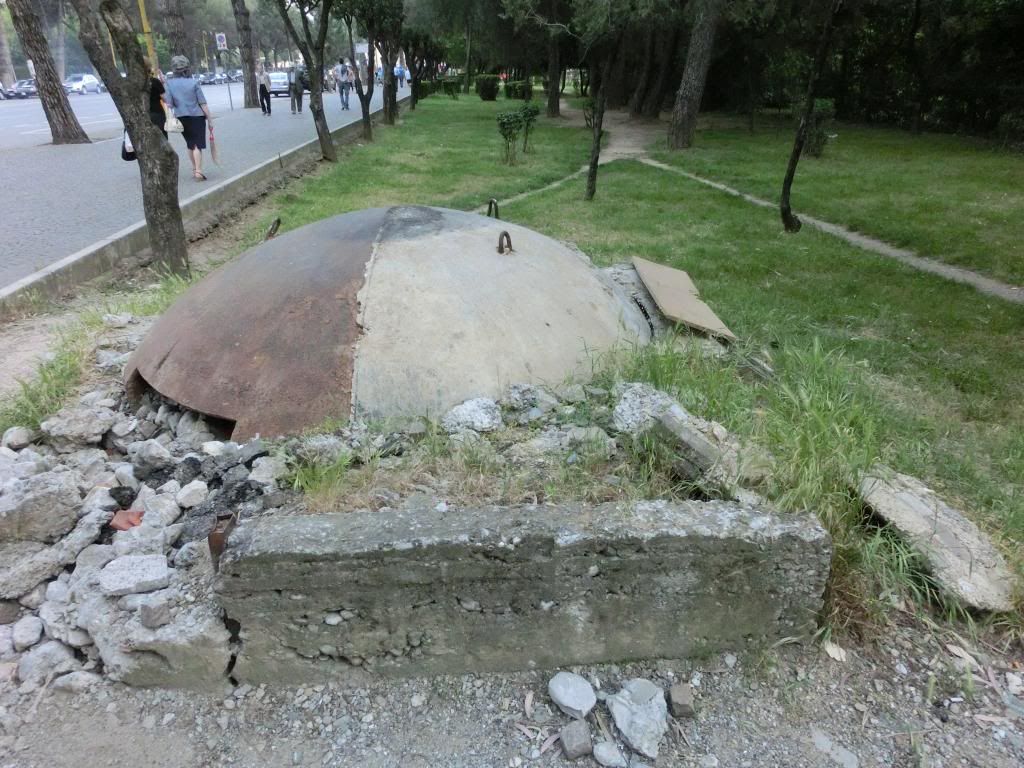
| old bomb shelter in tirana |
Sunday, July 21, 2013
A 72 Hour Rain - The Balkans (D13-16)
Arrived at noon in Budva - a base for mass tourism on the central part of Montenegrin coast. It has developed around a small peninsula, on which the old town is situated. For convenience, I stayed near the bus station and strolled the beach and old town in the late afternoon. I think Budva is a case of poor planning and over development with towering unattractive apartment buildings and hotels being built wherever there is open space - which unfortunately includes building directly on the seaside. The beach and promenade leading to the old town were also a letdown - crowded (it was Saturday though) and constantly thumping house music with a carnival atmosphere. The old town was rebuilt and completed in the late eighties after an earthquake in 1979. It is quite nice with most of the architecture of Venetian design. On the early bus next morning to Ulcinj, the southern most major town along the Montenegrin coast before reaching the border with Albania. My initial plan was to stay there for a night but changed my mind along the way and decided to travel on to Albania same day. In Ulcinj, the bus left at noon to Shkodra and from there immediately hopped on a furgon to Tirana. After a long day of traveling, I finally got to Tirana in the late afternoon. Before getting there, I did not know what to expect but I slowly discovered that Albania is the kind of place that I like - a country with few tourists and in Tirana, friendly people and good affordable restaurants. Even the taxi drivers in Tirana refused to rip me off and instead just gave me walking directions.
It was raining when I stepped out next morning. Not a storm by any means but the kind of non-stop consistent rain that can mar outdoor sightseeing or activities to a large extent and it continued relentlessly for the rest of my stay there. I spent the whole morning looking for the tourist information office and a travel agency in central Tirana that offered one or two days standard local tours so that I could squeeze more sightseeing and avoid dealing with the tricky local transportation system. I imagined there must be easily half a dozen of such agencies but incredibly, I did not find any. The saving grace of this fruitless day was Era, an Albanian restaurant in a rather trendy entertainment and shopping district of Blloku. It is the sort of place where once you have eaten there, it is hard to move on. And so I braved the rain and ate all my meals there while in Tirana. It was that good. On my last full day in Albania, I traveled 120 km south of Tirana to beautiful Berat. It rained throughout the painfully long bus journey and in Berat too. Its most striking feature is the collection of white Ottoman houses climbing up the hill, earning it the title of 'town of a thousand windows'. Despite the bad weather, I managed to cover most of the main sites with the walk up the steep cobblestone road to the Kalaja (Castle of Berat) particularly memorable. Incidentally, it was still raining as I rode the taxi to the airport the next morning.

Sunday, June 23, 2013
Bohemian Rhapsody - Peru (D1-4)
I was delighted to find that one of the most economical ways to fly to Lima was to first get to Buenos Aires and then an onward flight from there. Never did I expect to return to one of my favorite cities (not a big city fan though) again so soon. I would stay for three nights in BA before jetting off to Lima and then return for another three more nights at the end of the trip. For my first visit, I opted to stay in Villa Crespo, a neighborhood adjacent to Soho Palermo as I wanted to spent more time exploring Palermo - a residential barrio of parks filled with pines, palms, and willows, where families picnic on weekends and couples stroll at sunset. One of its sub-barrios, Palermo Viejo is very popular among visitors for its bohemian vibe and trendy shops, cafes and restaurants. It was Labor Day and the Porteños went to the parks in droves and I had a field day people watching and photographing. Las Canitas is another interesting place not far from Palermo that I like. As in Palermo Viejo, some of buildings particularly the shops and restaurants are unique and artistic in design and fun for photography too. For me, no trip to BA is complete without eating at one of the parillas and one of the very best in town and my favorite is La Cabrera. The bife de lomo is marinated and grilled to perfection and when complimented by a glass of Malbec... just divine.
Arrived late at night in Lima and leaving the next day afternoon, I did not expect to do or see much of the city but the Barranco where I stayed was a surprisingly engaging neighborhood. Barranco is compact with its fine streets, small colonial squares and buildings, where one can still sense the old spirit of Lima. It is also home and working place of many of Peru's leading artists, musicians, designers and photographers. I was surprised not to see more tourists here. Most of the places of interests and popular restaurants are within walking distance. Lunched at Canta Rana, a popular local restaurant that served up amazing ceviche. I enjoyed a post lunch stroll around the iconic Bridge of Sighs built over a ravine in the middle of leafy trees and watched the world go by at the low key Municipal Plaza. Barranco is also home to several interesting free museums, art galleries and studios. I visited the Artesanos Don Bosco - a studio and showroom in a restored century-old building for handiwork of Andean village woodworkers. Lucia de la Puenta is another interesting but small art gallery around the corner. I stayed in a fabulous B&B that is a guesthouse, museum, art gallery and studio rolled into one. There are many intriguing art pieces on display in the garden and around the pool area and an art gallery with excellent view to the Pacific coast. Too bad I only stayed here for a night.
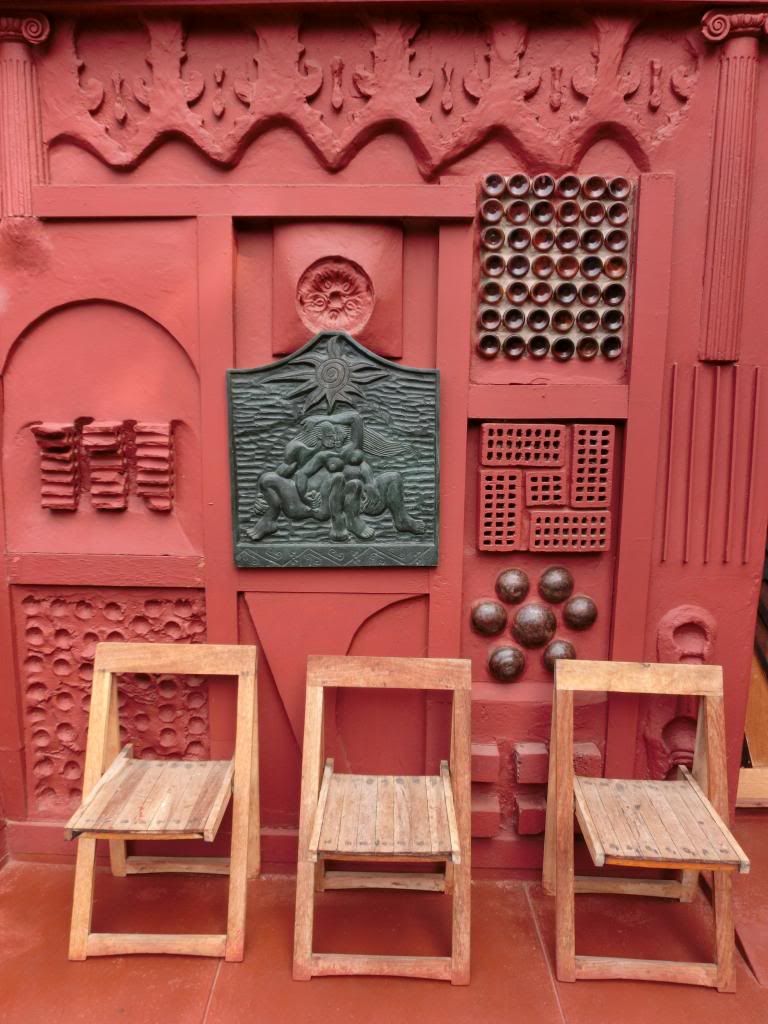 |
| erotica art in barranco b&b |
Saturday, April 27, 2013
Ruaha - East Africa (D5/6)
Pride of lions under a baobab - saw this fitting image to me of Ruaha within minutes of leaving the airstrip. I first heard about Ruaha National Park years ago from a wildlife film about lions here regularly hunting buffaloes during the dry season. The main reasons for taking on such formidable prey are the dispersal of smaller animals and the absence of wildebeest, a preferred prey of the lions. Over at Lake Manze camp the other evening, I overheard a guest likened Ruaha to 'a land of baobab'. Located in the middle of Tanzania, it is the largest national park in Tanzania covering an area of about 22,000 sq km. It is also uncrowded and despite its size, less than 8000 visit the park each year although the numbers are slowly increasing. We break for a fabulous picnic lunch at a rest point overlooking the dried out Mwagusi river bed. The river which is dry throughout most of the year and acts as a water source for all the surrounding game. It was a busy time of the day at Mwagusi - giraffes, banded mongoose, baboons and impalas were all present. After lunch, we game drove around the Mwagusi area a bit more before heading west to the camp. On the way, I felt a sharp stinging pain on my right arm and found out from my guide later that it was the tsetse flies. Although the human sleeping sickness transmitted by tsetses in this region has been eradicated, these vicious insects still deliver a painful bite and can be really annoying on game drives. Not too far from the camp, we found 2 male lions from the Mdonya pride. Unlike in Selous, off-road driving is actually prohibited here (NP rules) but the guides will readily ignore this rule so getting close to those lions here is still a possibility.

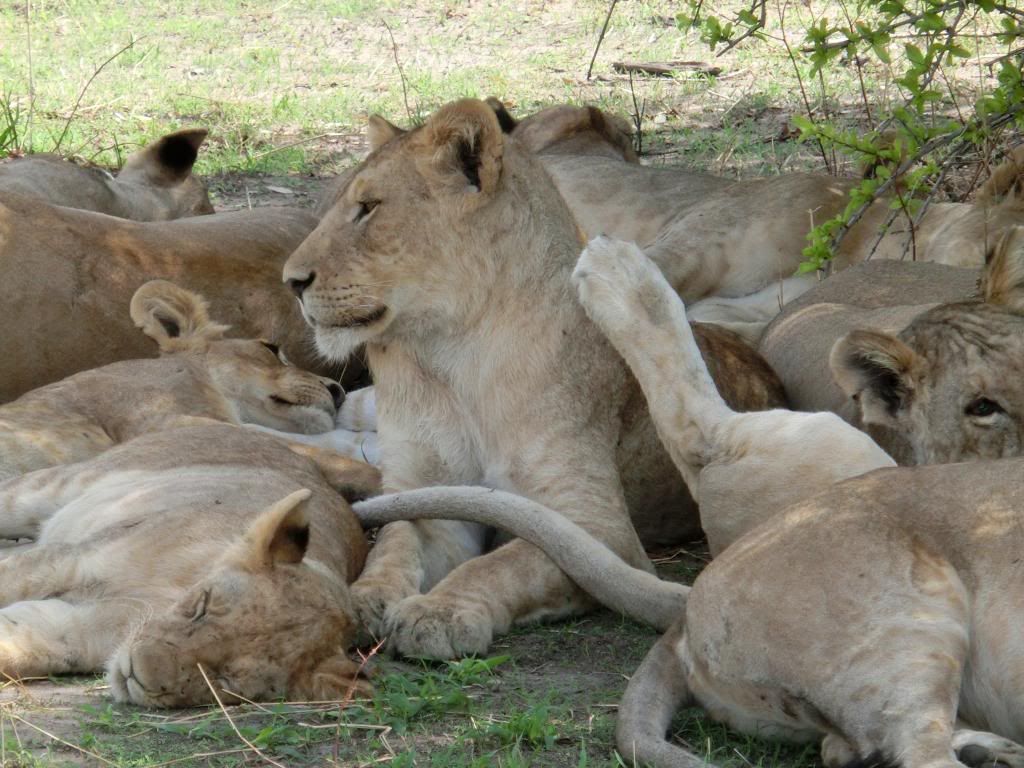
Woke up by hyenas (how often do I get to say that?) which sounded barely a few feet away from my tent early next morning. My tent was the furthest away from the main camp area and thus most likely to have wild animals wandering closer to it. After a leisurely breakfast, set off for a morning (0800) game drive. There was a family of bat-eared fox living near the camp. An adult pair and a pup that was curiously peeping from the burrow. Next, the Mdonya pride and this time more than 15 lions including several cubs, huddling around two bushes for shade. It was the biggest pride of lions that I have seen so far on safari. There were also sightings of some interesting birds like the beautiful lilac bellied roller and the majestic martial eagle. Ruaha is one of those few game parks that are residence to both the greater and lesser kudus. The rarer lesser kudus are extremely shy so trying to take a decent picture of them posed a real challenge. Other notable sighting included a small herd of buffaloes and game viewing was especially sparse on the way back to the camp. Once back in camp, the manager suggested that I have lunch at my tent veranda since no other guest would be back. When I got back to my tent, the table was all laid out and ready for lunch to be served. Nice touch and exceptional service. After lunch, did some reading and watching vervet monkeys playing on the old Mdonya river bed til my late afternoon game drive. The late afternoon drive was a short one (2 hrs) so we were not able to venture too far from the camp and I did not see much of anything. Oh and the tsetses were relentless...
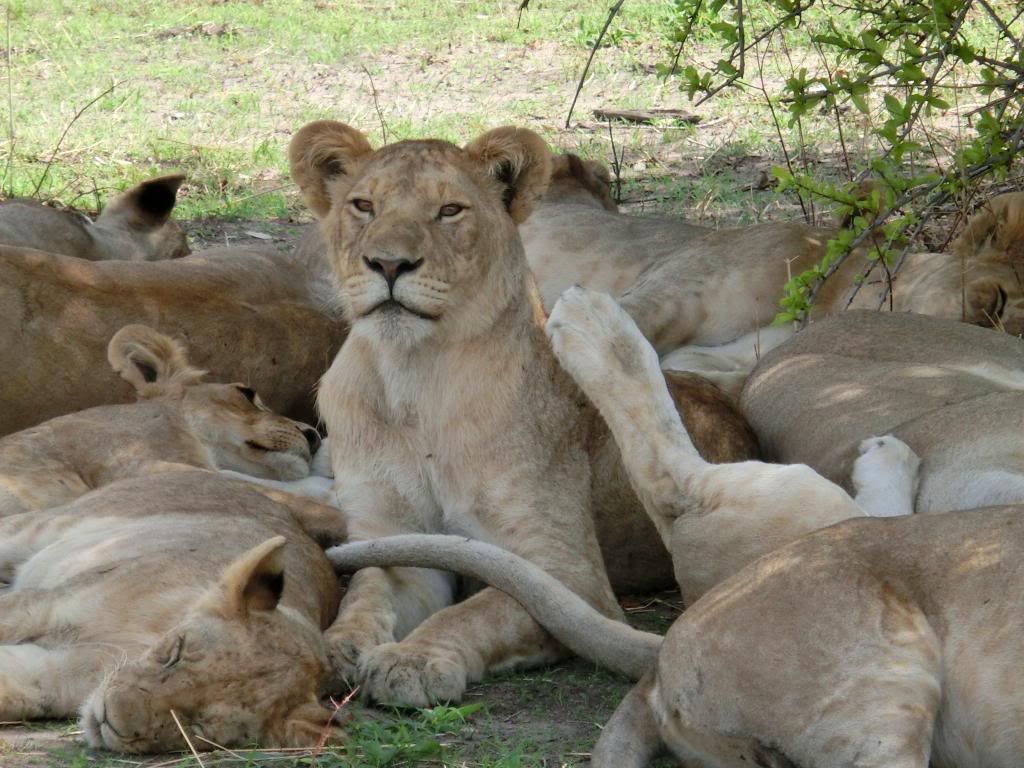 |
| mdonya pride in ruaha |
Woke up by hyenas (how often do I get to say that?) which sounded barely a few feet away from my tent early next morning. My tent was the furthest away from the main camp area and thus most likely to have wild animals wandering closer to it. After a leisurely breakfast, set off for a morning (0800) game drive. There was a family of bat-eared fox living near the camp. An adult pair and a pup that was curiously peeping from the burrow. Next, the Mdonya pride and this time more than 15 lions including several cubs, huddling around two bushes for shade. It was the biggest pride of lions that I have seen so far on safari. There were also sightings of some interesting birds like the beautiful lilac bellied roller and the majestic martial eagle. Ruaha is one of those few game parks that are residence to both the greater and lesser kudus. The rarer lesser kudus are extremely shy so trying to take a decent picture of them posed a real challenge. Other notable sighting included a small herd of buffaloes and game viewing was especially sparse on the way back to the camp. Once back in camp, the manager suggested that I have lunch at my tent veranda since no other guest would be back. When I got back to my tent, the table was all laid out and ready for lunch to be served. Nice touch and exceptional service. After lunch, did some reading and watching vervet monkeys playing on the old Mdonya river bed til my late afternoon game drive. The late afternoon drive was a short one (2 hrs) so we were not able to venture too far from the camp and I did not see much of anything. Oh and the tsetses were relentless...
Thursday, March 21, 2013
Dubrovnik vs Kotor - The Balkans (D11/12)
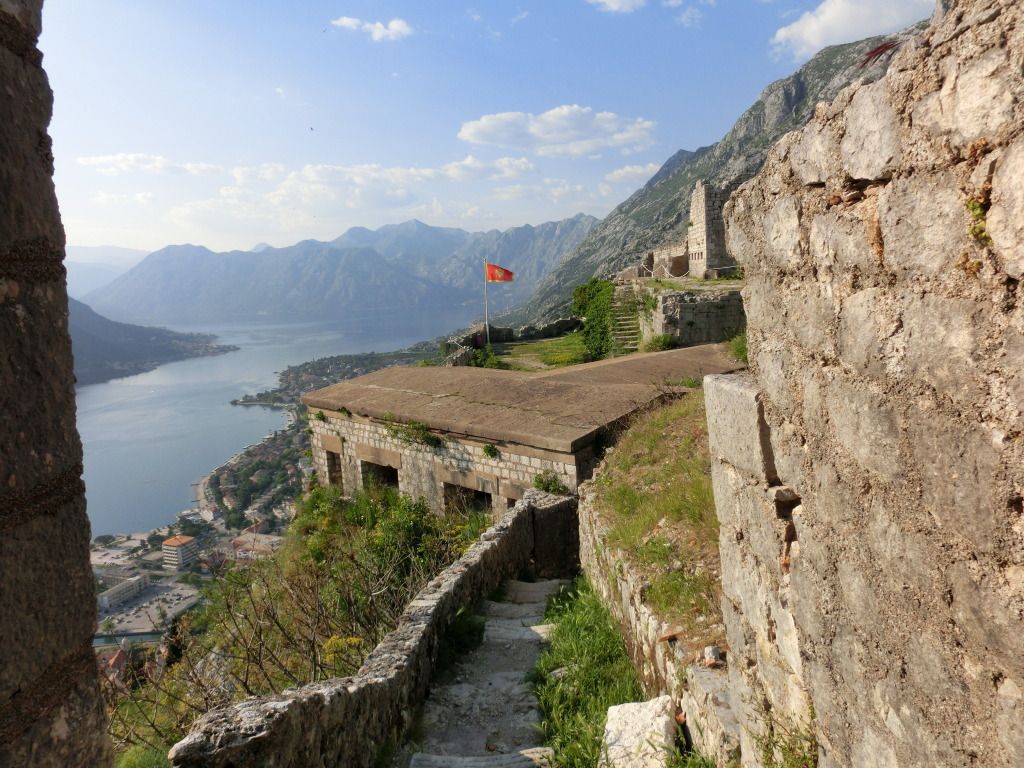 |
| view from the st john fortress in kotor |
Tuesday, February 12, 2013
An Inconvenient Storm - East Africa (D3/4)
Not long after we had left camp for a full day game drive, we saw a pride of lions - 2 adult females and 3 big cubs all resting under trees. We were game driving to Beho Beho hot springs on my third day in Selous. We passed a uniquely picturesque lake filled with birdlife and in the lake stood trees - dead trees. The trees died when the area became flooded but what I found intriguing was that they did not just rot away but remained standing. Just like if the Dead Vlei became flooded again. On we went and another pride of lions and this time 2 males and a female. Unlike in Etosha and Kruger, off-road driving is allowed here so we were able to get really close to the lions although other more skittish animals will simply run away. It seemed like the heat was getting to the lions especially the big males as they panted heavily even when inactive. The manes on the males were also noticeably thinner and that might have something to do with the climate as well. The guide located a kill (wildebeest) hidden in the bush not far away from the lions. As we drove toward Beho Beho, the concentration of game quickly dried up and for a while, even the impalas went missing. Then we arrived at Lake Tagalala, a bird paradise with Marabou Storks, White Pelicans, Pied Kingfisher and others. Along the shore, crocodiles were rushing into the lake to join the hippos as our jeep approached them. We stopped for a picnic lunch in this wild setting - just us with no other vehicle in sight by the lake. What a moment in safari... After lunch, we left Lake Tagalala and drove to the hot spring at the foot of Beho Beho. Apparently I had chosen to visit the hot spring on the hottest day in recent times but I would not leave without taking a dip. It felt lukewarm but the water from the small falls was a bit warmer. My guide and driver joined me in the hot spring for an enjoyable but quick dip. This area in Selous is really isolated and in fact we had not met another vehicle since we left the lions sighting in the morning. On the way back to camp, I was lucky enough to witness the most amazing spectacle of large flocks of Red-Billed Quelea while passing an open area. They formed dark fast moving clouds and dodging and weaving around trees, appeared upwards off the ground as if from nowhere.

'Let's go that way,' our guide pointed to the direction of the hyenas. I thought that was an absurd thing to do in a game walk. We had earlier seen several hyenas about 300 meters away and they disappeared behind the bush. Game walks can be really interesting and this morning, I picked up on the characteristic of various animals (giraffe, elephant and hyena) dung, footprints (hippo) and smaller animals and insects (buffalo weaver and lion ant). And thankfully we did not run into those hyenas again for the rest of the walk. The early morning game walk ended quite early so the camp manager had arranged for me to do a short game drive after breakfast. Here in Lake Manze Camp, they are really accommodating and flexible about the activities and the quality of food, service and accommodation have far exceeded my expectations. Because it was not the peak season, I was given exclusive use of the vehicle for two days. The late morning game drive however was a shared drive but it was nice to have others around too. First notable encounter was 2 hyenas sleeping under some fallen trees. All of a sudden, one of them ran out and we followed it and saw it chewing on an impala leg behind a tree before running away. I kind of prefer watching hyenas from the safety of a vehicle. We drove around some more without seeing much until we found vultures feeding on an impala carcass. The carcass looked fresh and it probably died of natural causes. Back at the camp, I was game watching from my tent porch after lunch when I noticed dark clouds ominously appearing. It was supposed to be the beginning of the wet season but the for the past two days, the weather had been great. But now a storm was brewing as I eagerly awaited for the final game viewing activity in Selous. I was saving the sunset motorboat safari not only because it was the most popular activity but also the National Parks that I was going to after that did not have boat/river activity. On the way to the nearby starting point, it began to pour and it was absolutely torrential. I was quickly drenched at the back of the open sided safari vehicle. When we got there, I thought the boatman was going to call it off but he waved me over instead. I was putting on the raincoat handed to me in the boat when we were devastated by a strongest gust of wind imaginable, smashing tree branches, pebbles, sand and other debris at us and only the rope tied to a tree kept us by the river bank. End of my motorboat safari.

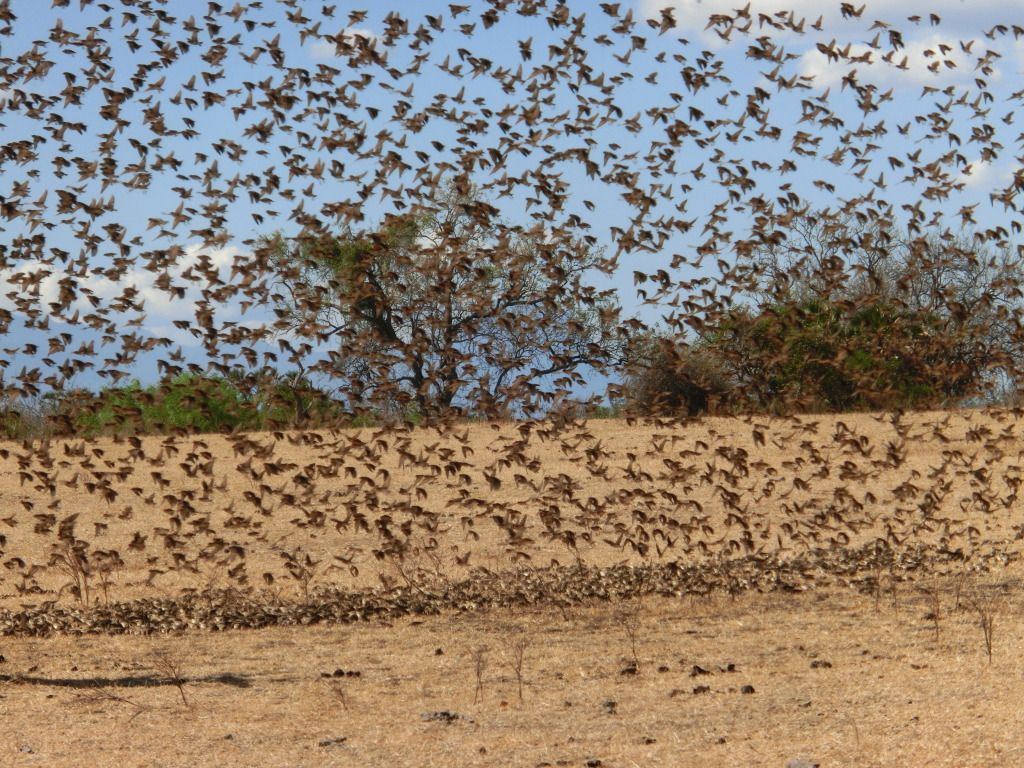 |
| nature marvel - flock of red-billed quelea |
Saturday, January 5, 2013
Got Gregada? - The Balkans (D8/9/10)
Back to Split again for a catarmaran connection to Hvar. There was enough time for something that I did not get to do during the first visit - climb up the Cathedral of Saint Domnius. It is the tallest structure as far as I could see and offers a glorious unobstructed 360 view of the city. Hvar has long been one of the most popular Croatian Islands. Hvar Town is one of the Adriatic's most bewitching and best preserved historic towns. Starting from the grid of narrow lanes of Old Town known as Groda, I gradually worked my way up the slopes to the Citadel or Spanjola as the locals called it. There is a marine archaeology collection and a former prison among the halls, although the real attraction is the view from the Citadel's ramparts. The mostly intact defensive wall plunge down the hillside towards the terracotta roofs of Hvar Town below, while beyond stretch the Pakleni islands just offshore. Dinner was the local delight gregada - a stew of fish cooked in white wine and a Hvar specialty - in an old town restaurant. Day two in Hvar Town began with light breakfast and idle stroll along the waterfront to the Franciscan Monastery at the south end. In an unplanned move, I hired a taxi boat along the marina to take me to the Pakleni islands. The boatman recommended the Palmizana beach - a popular excursion destination of Hvar visitors. The beach is located in a beautiful bay, covered with pebbles and has rocky parts and at the back of which there is a pine tree forest. I found a nice quiet restaurant hidden among the pine trees that served up a mean gregada with scampi - just what I was craving for.
Some say that Korčula is very much like Hvar. But the thing is that after visiting several Dalmatian towns, most if not all will start to appear and feel somewhat similar. It was getting dark when the catarmaran arrived in Korčula and by then I was already used to looking out for those ladies with rooms to rent out waiting at the harbor and bus station. They can be a good source of accommodation for anyone who is traveling during the low and shoulder season in this part of the world. It is easy, safe, convenient and much more affordable and better value than the overpriced hotels. There was also a feel good factor since I knew that I would be contributing directly to the local economy and community. I got another comfortable bargain room just paces from the old town wall. Next morning I woke up to the sound of the distant church bell ringing. Korcula Town sits on an oval hump of land, a medieval walled city with a series of narrow streets that branch off the main thoroughfare. I spent the day, exploring the old town with an invigorating siesta back at my room in between. Korčula may be much like Hvar but one thing that was sorely missed here was the gregada.
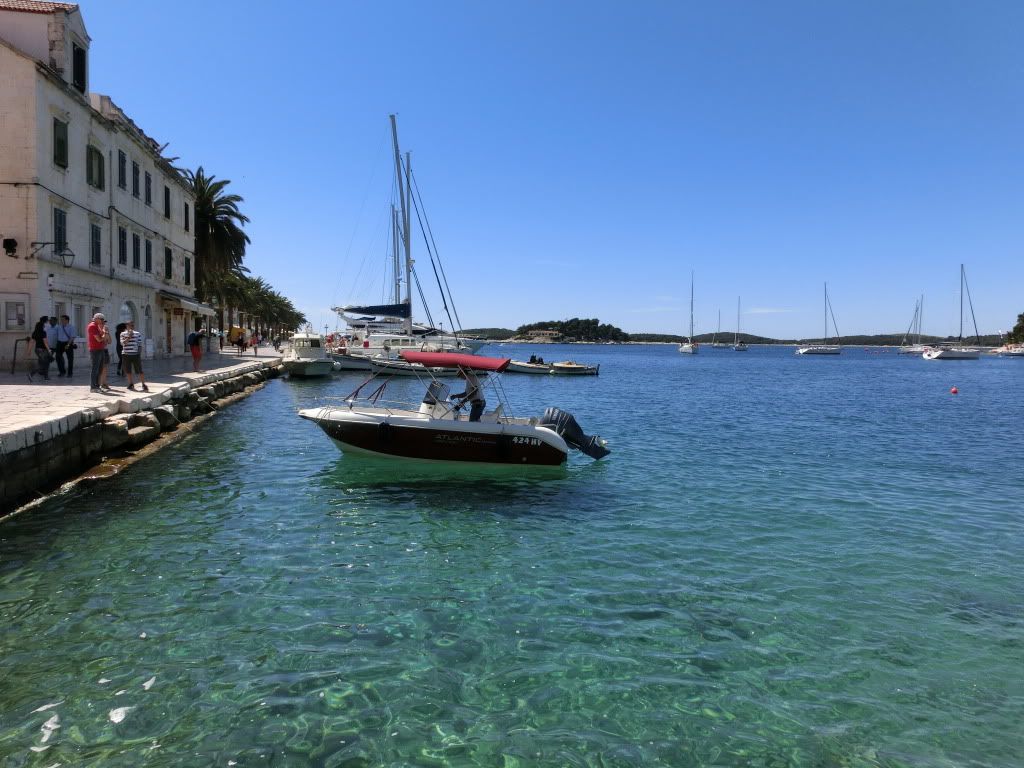 |
| my ride to the pakleni islands |
Saturday, December 8, 2012
Selous - East Africa (D1/2)
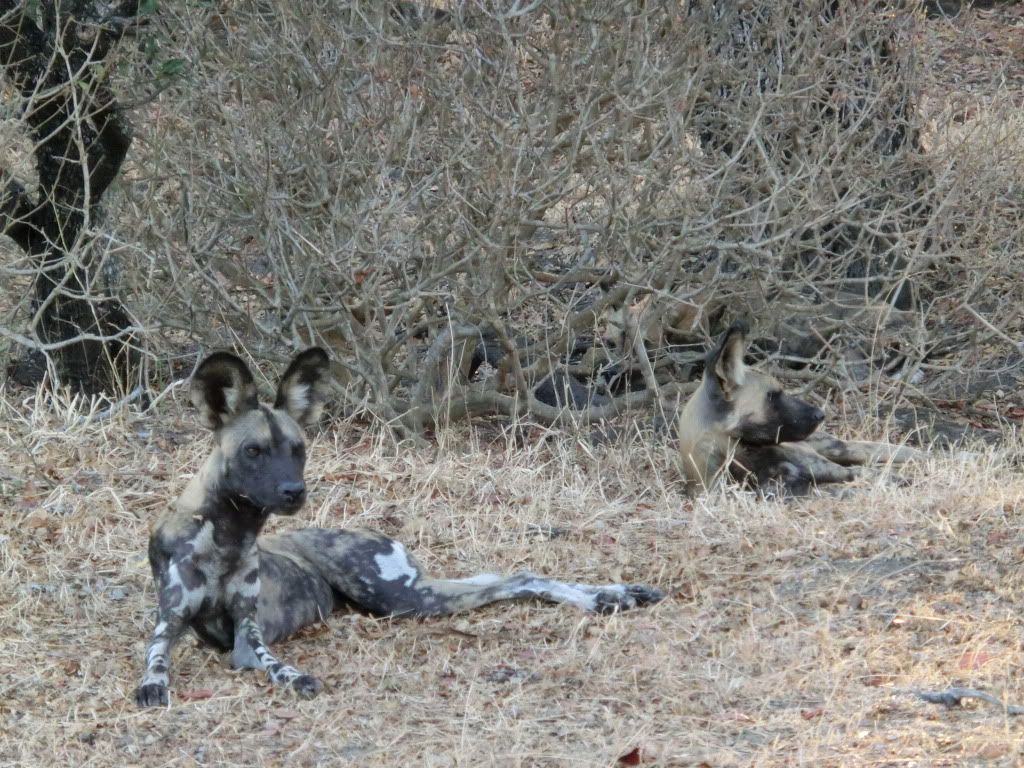
The familiar scent of game parks greeted me as I took a deep breathe while settling in on the jeep that was waiting for me at the airstrip. No matter it took 20 hours - including a grueling 4 hour plus wait at the tiny Dar Es Salaam safari airport and a light aircraft flight from there into the reserve - of travel time to the Selous Game Reserve, when the guide asked if I would like to do a game drive before heading back to camp, I enthused, 'Absolutely!' Covering a staggering 55,000 sq km, the Selous Game Reserve in southern Tanzania is one of the largest game reserves of the world. Most of the reserve remains set aside for game hunting and only a section of the northern park along the Rufiji River has been designated a safari activity zone. Spotting several giraffes near the airstrip, the guide told me that prior to my flight landing, they had to chase them off the airstrip to prevent an accident. Now that is what I call great personalized service. And before I could contain my excitement of finally being there and doing the first game drive (a favorite activity of mine) in 3 years, I saw the one animal that I wished to see most here in Selous - the critically endangered African wild dog or hunting dog. There were once approximately 500,000 African wild dogs and packs of 100 or more were not uncommon. Today there may be as few as 4,000 and they are primarily found in eastern and southern Africa, mostly in the two remaining large populations found here in Selous and the Okavango Delta in northern Botswana. There were several pups resting around the trees and a couple of adult dogs (probably 'baby sitters' as the rest could be out hunting) nearby... top of my wishlist checked, this was shaping up to be a great safari trip.

The motorboat safari in Lake Manze is excellent for birding and getting up close to some animals like the hippos and crocodiles and it can also add variation to the game viewing activities. My late morning boat safari brought me my first sightings of birds like the Egyptian geese, intermediate egret and many more than I could remember. The lake side was teeming with animals like waterbucks, buffaloes, giraffes and elephants while the two most abundantly animals seen in the lake were crocodiles and hippos. The crocodiles were mostly small to medium sized (rarely longer than 2m) and I reckoned the hippos posed a greater threat with plenty of them appearing larger and heavier than the motor boat. Our boat glided pass barely two meters from a group of hippos as my boatman gave me a somewhat reassuring smile. What the hell was this guy doing! But there were just so many hippos in the lake and I began to loosen up after several more close encounters with these big fellas. I thought the exhilarating boat safari was hard to beat but the afternoon game drive was quite amazing too though in a different way. Late on in the game drive, it started with just two adolescent lions - a male and a female walking pass our stationary jeep, then out of nowhere another appeared and then another and soon there were 6 or 7 of them. We followed them to a waterhole and observed closely lions social behavior - drinking, playing (among the adolescences) and greeting one another by rubbing their cheeks and necks together. There were about eight in total, at least three of which were adolescent male. I have no idea how long we stayed to watch them for and we left as the sun set and one by one the lions moved away into the bush. On the way back to camp, we saw the same pack of African wild dogs from the day before. Again only the pups and a couple of 'baby sitters' were there and I noticed one of them was limping slightly. It was a moment to savor, knowing that this could be the last time I see them again on this trip.... as it turned out it was.
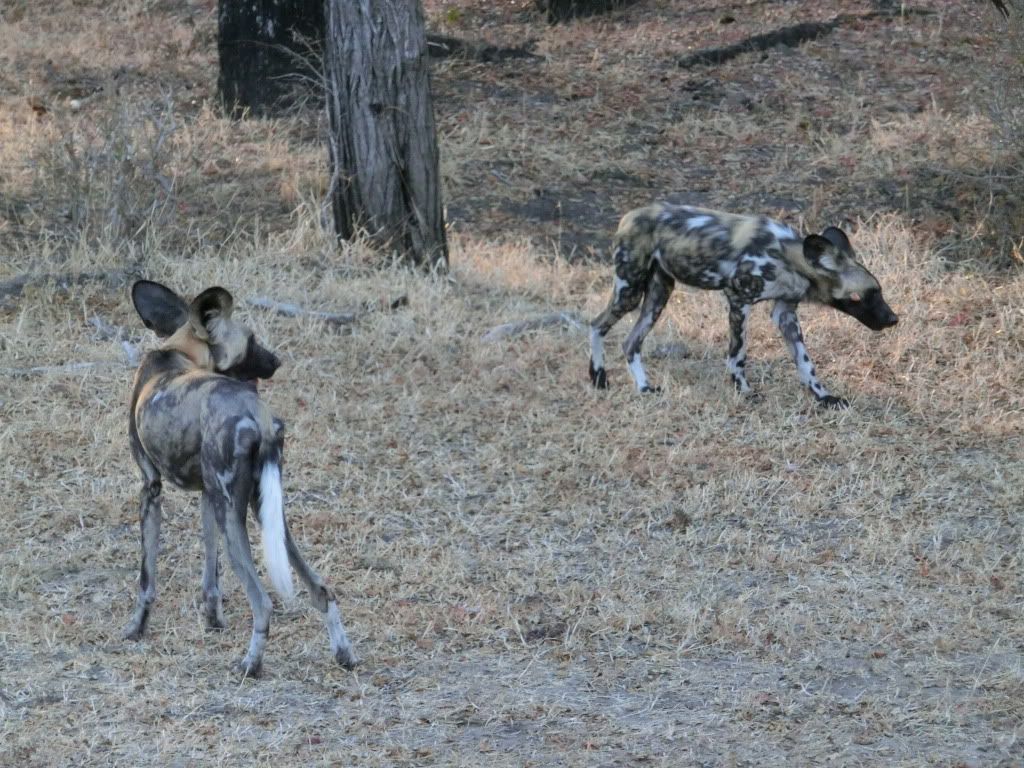 |
| african wild dogs or hunting dogs |
Wednesday, September 26, 2012
Retreat to Vis - The Balkans (D6/7)
I like a change of pace as I travel so I would, where possible, include some less-trodden or low-key places and while in the Balkans, that retreat came in the shape of the island of Vis. The furthest of the main central Dalmatian island from the coast, Vis served as a military base and was closed to visitors until 1989. The isolation preserved the island from development and drove much of the population away, leaving it underpopulated for many years. I rented an apartment from a lady who meet newly arrivals at the port. It was a great place at a great price - a minute walk from the port, adequately equipped and furnished and a spacious balcony with a splendid sea, port and Vis town view. It was easily my favorite accommodation choice of the trip. I spent the rest of the afternoon lazing off a nearby beach. The water was still cold but that did not stop me from taking quick dips. That evening, I walked along the scenic harbor side promenade to Kut for dinner. It seemed like everyone recommended this restaurant but I found it to a bit pricey and the portion small. The quality of the service and food was good though. I had the grilled squid, scorpion fish and local white wine.
After a hearty buffet breakfast at what seemed to me like the only hotel in Vis Town, I paid another visit to the medieval neighborhood of Kut. I did not linger for long as I had arranged for a car with driver for a late morning pickup to travel to various parts of the island. First stop was the town of Komiža on the western coast. Komiža is a small pleasant fishing town on a bay with a bohemian feel about it. We drove up to the hills for a stupendous view of Komiža and the coastline before heading off to the beach. It would be a shame to leave Vis without visiting one of its fabulous beaches and there are actually quite a few to choose from. My choice was the Srebrna or silver beach situated on the south-eastern side of the island. Srebrna is an astoundingly beautiful pebble beach with unusual, large pebbles that glare under the sun. It was nice and quiet, the way that I like it but the water was too cold for a swim. A short stay later, it was off to lunch at a konoba that specializes in peka cooking about 4 km outside Vis town. Peka is a cast-iron dome, placed over coals, which they use to slow-roast octopus (or kid lamb). It comes with potatoes, optionally carrot is added. My pre-ordered peka octopus was so tender and stickily caramelized melting in the mouth... divine. Back in Vis town in the mid afternoon and decided that it would be a great idea to walk off the incredible meal to nearby George III Fortress. After some uphill walking, I realized that I had missed the turn to the fortress and ended up at the rogacica instead. To get to the ruins, there was a thorny scrubs covered slope to overcome but the view was certainly worth all the nicks on the shins and effort.
 |
| peka octopus - simply the best |
Subscribe to:
Posts (Atom)
