 |
| mother and baby hippos |
Monday, October 3, 2016
Lions vs Hippos
I found some great photos taken at the South Luangwa National Park while compiling photos for another post and thought it would be a shame if I didn't share them here. It was my last morning game drive - I was set to leave at noon for the Lower Zambezi NP. Midway through the game drive, we spotted two sub adult lions not far from each other along the Luangwa river. Both lions were a bit odd in their behavior seemingly focused on something at the far bank. Using our binoculars, we scanned across the opposite bank hoping to find a clue to what was bothering them. Nothing. We drove a little more when our guide suddenly stopped and pointed across the river, 'Lions!' He then positioned our 4X4 to face the river. Peering through my binos I saw maybe ten lions feeding with several more lurking close by. In the river, pods of hippos as well as an usually high congregation of crocodiles perhaps alerted by the lions kill. None of us could get a clear look at what the kill was but what was about to happen sure gave us a pretty good idea.
Drama was set to begin. A hippo emerged from the water closely followed by another then another. Soon up to six to seven hippos were out of the water - there was even a baby with its mother among them. This is unusual to say the least. Hippos generally do not leave the water in the day much less emerging in a group with such deliberation and certainly not in the clear presence of lions. They then did the unthinkable - one of the hippos marched up the beach alone heading toward the lions! It stopped and stood roughly ten meters out face to face with the pride. Lions did not flinch. The standoff barely lasted three seconds with the hippo turning around quickly and ran back to safety. Team hippo regrouped by the river and soon they were ready to launched a group confrontation this time. Led by two with another three closely behind, they approached the lions. The lead hippos just merely meters from mortal danger. Again the lions hardly flinched. Both hippos nearest to the lions turned their backs and ran. Deja vu.

Sunday, October 25, 2015
Puku Ridge
Puku Ridge Camp was the second of my three camps in South Luangwa NP. It was also the smartest and most luxurious of the three. The camp is owned by Sanctuary Retreats - a company that owns luxury properties in Africa and operates expedition cruise in Asia. Ideally it should be saved for the last but my agent was unable to find availability for that. Built on a rocky hillside in the central part of the NP, it overlooks the Kakumbi Floodplain teemed with wildlife including the puku antelope which the camp is named after. It is small and intimate camp and has been constructed to blend into the local surroundings. The oversized tent has it all - a king size bed with mosquito net, indoor and outdoor shower, bath tub, small lounge, writing desk and private deck with full view of the floodplains. Tea /coffee is brought to the rooms during the morning wake up call.
The main bar/dining area has a high thatched roof, under it is a simple concrete bar and high bar stools. In front of this is the lounge area and below it is the dining area. It affords dramatic view of the plain and the two waterholes that lie far below. These waterholes are floodlit at night. The dining style and quality here is akin to fine dining in any good city restaurants. There were plenty of wonderful sightings from the game drives as well - leopards and large herds of buffaloes and elephants. Puku Ridge Camp is without doubt a luxurious and high quality camp that delivers but I somehow feel that the operation and management reminiscent that of a big chain group. Nothing wrong with that but I personally would prefer an owner run and manage camps more.
 |
| interior of my luxury oversized tent |
Wednesday, September 23, 2015
What's a Flatdog?
Flatdogs Camp was the first of my three camps in South Luangwa National Park, one of the finest safari destinations in Africa. It is the closest camp outside the main gate of the NP. Although fairly large, the camp is nicely spread out so there is no feeling of over crowding. Unlike many safari camps, guests are not 'hosted' here - so guests take their meals independently, rather than communally with a guide or manager. At the open-sided main area, there are plenty of seating options, inside or out, you can order something at most times of the day. It operates more like a restaurant than safari camp - there is an à la carte menu with no set meals or set meal times. To support the surrounding community, it does try to source food locally. I really enjoyed the meals here - the atmosphere casual and relax, the food varied, tasty and fresh, with generous proportion. They have the chocolate brownies to die for! There are different accommodation options available here like the chalets, tree houses and standard and luxury safari tents.
I stayed in one of the new luxury tents with a good view of the Luangwa River. It is set under a thatch, simple, spacious, with a double bed, mosquito net, a standing fan, bedside tables and lamps, tea/coffee-making facilities and outside sitting area. The walled open top bathroom is located through a door at the back. It is spacious but simply done, with stone floor, flushing toilet, washbasin and hot and cold shower. Both day and night game drive are offered here with a good level of guiding though because of its size, it is rare to have a vehicle all to yourself. Apart from a pride of 19 lions, the most memorable sighting here was a leopard with two very playful cubs. The flexible approach here is best suited for people of independent minded nature. It is also very good value for money, bridging the gap between budget and high-end safari camps in this area. It is owner run and manage which is a good thing. The engaging conversations with them - priceless. Flatdogs = Crocodiles.
 |
| leopard with two very playful cubs |
Thursday, August 6, 2015
Tracking the Last Rhinos on Foot II
Snugly wrapped in a fleece blanket, I set off with three trackers and five other travelers at 530 a.m. in search of black rhinos. We drove down to the Klip valley looking for fresh rhino tracks. Because rhinos tend to drink during the night, our plan was to first lookout for signs around water holes frequent by the rhinos and go from there. Grootberg Lodge in the Khoadi /Hoas Conservancy was the ideal base. The lodge itself is nothing short of breathtaking - standing at the top of a plateau near the edge overlooking a network of canyons. I took a short sunset drive on the plateau the day before and it was incredible to say the least. The game density was exceedingly high - oryx, mountain zebras and springboks abound on such a small area (the plateau is about 8 km long). Because of the elevation, it produced a visual effect of infinity with the animals at times appeared to be standing nearer to the edge than they actually were. And whenever the drive took us close to the edge, the view was stupendous. We stopped for a sundown drink at the opposite end of the plateau from the lodge. It was lovely and I would have wanted to stay longer but a troop of baboons was ominously closing in on us. Next morning en route to the waterhole, one of the trackers spotted a rhino near the top of a plateau a couple of kilometers away. We stopped the 4X4 along the riverbed and went on foot from there.
Following our lead tracker, we climbed steadily up and across the rocky slopes. Halfway to the top, we walked downward and across and then up again before reaching ground level. Tracking epitomizes abilities that humans have almost completely lost - to read the landscape and be aware of its smallest details. Nearly an hour past and our trackers conceded that we had lost the rhino. We made our way back to the river bed where our 4X4 was already waiting. As we enjoyed a cold drink, our trackers spotted another two rhinos a few kilometers away. They were on the slope but this time nearer to the river bed hence more accessible. We drove along the river bed toward them and set off on foot again. A few minutes of walking before reaching the foot of the plateau, we came within 30 meters of a bull elephant. It was eating from the thorny branches of an ana tree. "He's not bothered by us," one tracker whispered. We detoured and increased our pace once we passed the elephant. After a short climb, we found the rhinos. They were on higher ground roughly 50 meters away behind an ana tree. The calf was suckling. Keeping ourselves at a distance, we stood in silence and enjoyed the tranquil landscape. The rhinos then started to move and we tried to keep up discreetly. We then came face to face with the mother rhino barely 30 meters away. Waves of emotion rushed through me as I stood still before her. It's a moment I will never forget.... and the rhinos get to live.
 |
| my rhino trackers and the black rhino |
Thursday, July 2, 2015
Tracking the Last Rhinos on Foot
"If a rhino charge at us, we stay together behind a tree," our guide/tracker was going over the safety briefing with us. "If we encounter lions, don't turn your back on them, observe their behavior then slowly back away," he continued. "The worst thing we could do is to run away from an animal - we'll be finished," he warned us. There are approximately 5000 black rhinos left in the world and Namibia has the highest numbers of them with (approx.) 1700. Only about 700 of them are free-ranging (i.e. not confined in National Parks and sanctuaries) that are found in the Northern Namibia desert. It was these free-ranging rhinos that we were here to track. In January 2014 Texan hunter Corey Knowlton won a $350,000 bid for a permit to shoot a black rhino. In recent years, the Namibian Ministry of Environment and Tourism had allowed three permits a year, and Knowlton's permit marked the first time a black rhino hunting permit had been auctioned outside the country. Knowlton, the Dallas Safari Club who sponsored the auction and some conservationists and scientists insist that you can save the black rhinos by killing one. In theory, only surplus males are hunted, with each case considered on its merits. They would target an aging bull who was beyond his reproductive years and who posed a threat to younger rhinos. It would also provide much needed funds for rhino conservation projects. Read this.
But other animal rights organizations have criticized this conservation strategy and argue that the better focus would be eco-tourism, raising money from people willing to pay to see endangered animals up close in the wild. Killing endangered wildlife to save it is just wrong. It does not make sense morally, economically or from a conservation-incentive point of view. Economically, the actual benefit to the local people from trophy hunting have been found to be exaggerated or practically non-existent in some cases. For conservation work to be sustainable, engaging the communities is vital. On 29 April (exactly a month before my trip to Namibia), Knowlton shot his rhino. Grootberg Lodge in the Khoadi /Hoas Conservancy was the base for my rhino tracking. The building cost of the lodge was funded by European Union. It is the only lodge in Namibia that is wholly owned and operated by the community. The establishment of the lodge brought employment and a more sustainable income to community members as well as a revenue stream to aid and promote social initiatives and resources. It is a fine example of sustainable conservation. The lodge itself is nothing short of breathtaking - standing at the top of a plateau near the edge overlooking a network of canyons.
 |
| pool area at grootberg lodge |
Thursday, May 1, 2014
Lunch at the Catedral
Woke up this morning to some splendid news - Atletico Madrid had just beaten Chelsea (England) to set up a Madrid derby Champions League final later this month. It inspired me to write this post and I finished it in record time too. There were previously finals with both teams from the same country but this is the first time we have both from the same city. I'm a big fan of Spanish football and I love the city of Madrid so this is very pleasing for me especially when a team like Atletico, a perpetual underachiever (last league title in 1996 and last European final 40 years ago) emerges from the shadows of the big two. Atletico are also in great position to win the domestic league so it could be a double this year for them. Besides my dream finalists, there is also a certain connection I feel for this year final. At the competition group stage last October, I watched my first ever European cup game at the Estadio Santiago Bernabéu. Real won that game easily against lowly Copenhagen but who would have thought they will go all the way this year. They are of course giants of European football but then again they have failed to progress further than the semis since 2002 so....
On the same trip, I visited the Estádio da Luz - home to the Portuguese giants Benfica and the venue of the final on May 24. The stadium visit was completely impromptu. I was going to watch a World Cup qualifying match between Portugal and Israel later that evening at the Estádio José Alvalade - the home to Sporting Lisbon (Benfica cross town rival). I had also earlier watched a league game at Alvalade so I felt that I should at least do a stadium tour or something at the Estádio da Luz. At first, the idea was to pop in for a quick look about but I curiously followed a tour group into a restaurant. The restaurant turns out to be a match day VIP area and opened to all on non match days. The food was excellent and good value for this level of service and quality. The best part though was the view. While dining here, you can almost see the entire stadium through the full length and width glass windows. At the end of my meal after the tour group had left, the waiter let me in the stadium VIP seating area for a private tour. Perhaps he sensed my enthusiasm the moment I stepped into his restaurant. On the day of the final, I will be on safari in Zambia... may the best team win.
 |
| venue for the 24 may final |
Saturday, March 15, 2014
There's Something About Malaika - East Africa (D14/15)
Even in November when the big herds had all but moved on down to Serengeti, the density of game here in Masai Mara was still extraordinary. We saw plenty in the first afternoon game drive - little wonder why it is one of the top game parks in Africa. Mara is one of the smaller game parks (approx. 1510 sq km) that I have visited but it is still more than twice the size of my home country and it has one of the highest density of lions in Africa. It did not take long for us to find them too - two big male lions sleeping away. Immediately I noticed the manes on them were conspicuously thicker and darker than those in Selous and Ruaha, presumably due to the cooler year round climate here. Our guide then brought us to a two day old hippo carcass. It was a lion kill and only vultures and a couple of black-backed jackals were left feeding on it. Interesting spectacle but when the wind shifted, the stench and flies became almost unbearable. There were also many first sightings for me like the topi and Thompson gazelle on that drive. A lone young lioness laid in wait on a herd of zebras but she was hopelessly open and expose and didn't stand a chance. On the way back to camp, we drove by to see the two male lions again. They hardly moved at all since we left them. It was a good first game drive with much less vehicle traffic than expected. I stayed at the Mara Explorer Camp, a small camp owned by a chain. Set within the Masai Mara NP by the Talek River, it was atmospheric and rather luxurious compared to the other camps on this trip.

We set out in search of cheetahs and leopards next morning. An hour or so into the morning drive, we found two cheetahs - a mother known locally as Malaika and its nine month old cub. It was my first sighting of this elegant cat and it also turned out to be the most mind blowing experience! Our guide shut off the engine and Malaika approached our 4X4. Then like she had done it many times before, she leaped onto the bonnet and went on to climb and sit right above me on the roof frame. Our guide had earlier mentioned that cheetahs here sometimes use stationary vehicles as vantage points. By now, the cub was hissing and seemingly frustrated for unable to climb up to join its mother. For almost 45 minutes, Malaika sat there hardly moving except to switch sides several times. Time flew by and Malaika jumped off just as suddenly as the manner she got up and went back into the bush with its cub. Because Malaika was probably looking to hunt earlier, we went back after breakfast hoping to catch her in action. We found them but they were not alone. A hyena was loitering around and when it wandered too close, Malaika charged and it ran away. Bold move by Malaika especially when she is no match for a hyena. Cheetahs will not hunt in the presence of hyenas so we moved on. At a leopard sighting, there was already five vehicles ahead of us and we could not get close enough or a proper angle for any photos.

 |
| mind blowing experience |
Wednesday, January 15, 2014
Valley of the Condors - Peru (D 5-8)
The timing could not be better. The Cruz del Condor was already packed with camera-clicking tourists when I arrived. After settling on a spot near the vehicle drop off point, the first Andean condors emerged from the steep canyon walls circling near another viewpoint 200 meters further down from where I was. I reckoned there were easily a dozen of them gliding around those lucky folks. It was the second day morning of my Colca Valley guided tour out of Arequipa. The city of Arequipa makes an ideal base for such a tour to the Colca Valley. With El Misti as backdrop, its Plaza de Armas is one of the most beautiful squares in the whole of Peru. Spent an afternoon visiting Convento de Santa Catalina - the most visited building from the Spanish era of the city. A city within a city, this beautiful place with its colors, flowers and little streets made me feel like I have traveled back in time. The spectacular 154km drive from Arequipa to Chivay, the main village of Colca Canyon, traversing the high plains of the vast, barren Salinas and Aguada Blanca National Reserve. After tasting the rarefied air of the Patopampa Pass (4910m), we dropped sharply into Chivay (3630m). Stayed the night at Colca Lodge - a spa and hot spring lodge by a river set in a tranquil ravine nearer to the town of Yanque. Too bad I got dropped off at the lodge rather late in the afternoon as it was pure magic soaking in one of the stone built thermal pools by river.

We were at the Cruz del Condor cliff around 8am when the condors are most active using the thermal uplifts that rise from the valley's shadowy depths. As with other wildlife viewing, the condor sighting was by no means assured so I was ecstatic to see them. Then bit by bit, condors began to appear around our viewpoint and before long, I was completely overwhelmed as they swished by from different directions. Andean Condors are magnificent birds. They mate for life, they both take care of their chick, they do not kill animals, only eat their remains, they live up to 50 years in the wild, and they look the way they do for very specialized reasons. The condors are mostly black, but males have a distinctive white collar around their necks and some white markings on their wings as well. Andean condors are massive birds (wingspan more than 3-meter and male weigh up to 15kg), among the largest in the world that are able to fly. Because they are so heavy, these birds prefer to live in windy areas where they can glide on air currents with little effort. Whether it was having a condor zipping by so close above my head or a family of condors that landed on a rock at the edge of the cliff barely 20 meters away, remained there even as I left, the Cruz del Condor was undoubtedly the finest and most awe-inspiring moment of the entire trip. That is saying a lot especially in a trip that also included a little known place called Machu Picchu.

 |
| best photos taken with my modest compact camera |
Sunday, October 20, 2013
Watching a European Cup Match
Guess I'm being nostalgia but I still like to refer Europe's premier club football competition by its old name. I arrived in Madrid after a long haul flight in the morning on match day so it was going to be one long day for me. Late morning all over the historic center, the stark FC Copenhagen visiting fans were already in the mood and up for it. Got my first glimpse of the Estadio Santiago Bernabéu in the afternoon when I went to collect my ticket from the machine. It is one of the biggest (approx. 85,000 capacity) stadiums and home to one the most glamorous and successful clubs in Europe. I returned to the stadium a couple of hours before the game to soak in some pre-match atmosphere. The first thing that I noticed was the huge police presence for the game and they cleared out an entire road where fans were earlier gathering to watch who's who and I supposed the team buses as well driving into the stadium complex. After being chased off, I sat at a small park near the metro station. As more fans arrived in droves, some of the seemingly intoxicated away fans started to use the park as an open air toilet while laughing and shouting away. This did not go on for long before the police reacted and the offenders were subjected to some rough treatment. I heard loud sirens behind me and saw the Real Madrid team bus with police escort passed by. Pity I could not whip out my camera quick enough.
I got fantastic 1st tier lateral seat almost right in the center for the game albeit at a price. It was nice to enter the stadium early just to watch the superstars of Real warm up. The regular fans seemed to turn up just in time as the stadium really only got filled up close to kickoff. This was my first European game and I got goosebumps when the famous Champions League anthem was played. Without disrespecting FC Copenhagen, I was hoping for tougher opponents like the Italian giant Juventus but I was really happy just to be there. Throughout the match, I thought the home crowd was rather subdue and even the ultras chanted and sang only in short bursts. By contrast, the small contingent of traveling ultras managed to outdo the nearly 80,000 home supporters for long periods and I thought that was simply amazing. On the pitch however, the home team won comfortably as expected with Ronaldo and Di Maria bagging two a piece in a lively and entertaining match. I managed to capture the second goal by Ronaldo on camera so check them out. This season (actually they have been trying for the past ten seasons), Real Madrid will be gunning for 'La Decima' - a record tenth European Cup title. Buena Suerte. I hope that someday in the near future, I would be writing a post titled 'Watching a European Cup Final'.
 |
| champions league anthem |
Sunday, September 29, 2013
Timeless Athens - The Balkans (D17 -20 End)
Nice to be in sunny Athens for a change after days of relentless rain in Albania - so I thought. This was my second visit and unlike the first when I started off from here, it was the end point this time. Given the generally poor value of the hotels in Athens, I booked an apartment stay two blocks from Syntagma Square (convenient location for a short visit but not when there's a commotion). I also planned for more time here as felt that I somewhat hurried through a couple of years ago not doing justice to this timeless city. After a lunch of my favorite Greek fare (moussaka, grilled sardines and boiled octopus washed down with local beer), I started my afternoon walk at the Zappeio Palace where the 18th World Olympics Collections fair was ongoing. It then dawned on me that the city where it all began was playing its role in the run-up to the London 2012 Olympics. Continuing to the Panathenaic Stadium - an athletic stadium that hosted the first modern Olympic Games in 1896 and is one of the oldest in the world. Moving on, I came to a familiar surroundings of the ornate gateway of Hadrian's Arch and the striking Temple of Zeus. Entering Plaka from there and then came my favorite part of the walk - the Anafiotika quarter. A peaceful and picturesque maze little whitewashed houses brimming with flowers bedecking the walls. Emerging from Anafiotika, I found another familiar site of the Roman Agora (marketplace). Its standout structure is the Tower of the Winds - a twelve meter octagonal tower. My walking tour ended at the Hadrian's Library next to Monastiraki metro station. Not a bad workout especially when considering I had just arrived that morning.
I spent the next morning window shopping around Ermou Street and downed a souvlaki before setting off to the Acropolis. Taking a different route from two years ago, I approached the Acropolis main entrance via the south slope. At the right place at the right time, I fortuitously caught the Olympic Torch Relay Exchange at the Parthenon but at the same time, the weather began to change for the worse. It started to rain suddenly and my trusty 400 lekë umbrella bought in Tirana was rendered useless under the gutsy winds. It was extremely disappointing but I had no choice but to leave especially when I only entered the complex a while ago. After my visit to the Acropolis got rained out, I slowly made my way by foot back to the apartment. It continued to rain mostly for the rest of the afternoon and early evening so I called it a day for sightseeing. On my third and final full day here, I braved the sporadic rain and visited the Stoa of Attalos, its museum and the Roman Agora. Athens would be a perfect base for travel to the neighboring Balkan states if not for the occasional unrest caused by its economic woes and reforms. Wandering along the streets, stumbling upon an ancient church or archaeological site at a turn in the middle of the city and seeing the glorious Acropolis perched high or illuminated after dark from many different parts of the city, Athens is a gem. And those Greek fare, ouzo and wine.... I cannot wait to go back. Watch this space.
 |
| anafiotika quarter and acropolis |
Friday, August 30, 2013
My Favorite Safari Camp - East Africa (D7/8/9)
The full day game drive started at eight after breakfast in camp. Here in Mdonya Old River Camp, they were super flexible with the activities - all I had to do was to let the guide know my preferred activity the day before and he would make it happen. It is a small, simple tented camp situated among beautiful woodland in a relatively remote sector of the Ruaha NP. The comfortable tents have external shower and toilet facilities enclosed by canvas open to the sky. This sister camp of Lake Manze feels more remote, relax and laidback while the service and food quality are just as good. The game drive was not particularly productive although there was a rather intense moment when a young male elephant stopped to sniff around our 4X4 and guide as a herd was crossing the track. For too long, we did not see anything noteworthy til we spotted two male lions of the baobab pride asleep under the bush next to the dirt road around the Kimilamatonga Hill area. At the Ruaha River, the giraffes were visibly nervous, looking back as they walked and the reason behind that was lions. We did not try to get closer as there was an ongoing wildlife filming. For lunch, we stopped by a nice spot along the Ruaha River and went in search of leopards and cheetahs after that. At times, it can be a real struggle to stay awake on these full day game drives especially on a hot afternoon after lunch such as this. At the 'Little Serengeti', we saw Grant Gazelles - a favorite prey of the cheetahs - but no sign of the predators. We searched countless treetops - a favorite resting place for leopards - but it was not to be. All in all, it was a day of mixed fortune for game viewing.

Day 8 was another full day game drive. The morning drive was rather uneventful but there were some sightings of ostriches, my first on the entire trip. Since it was such an unproductive morning, we decided to take an extended lunch at the Mwagusi river bed (same place as day 5 arrival), amusing myself with numerous attempts to get a good shot at a giraffe drinking on the river bed. The animal was particularly paranoid and would stop and look up at the slightest noise or movement around it so that was not the easiest thing to do. After lunch, we drove to the Kimilamatonga Hill again and had better luck there the day before. For the rest of the game drive, the most exciting thing was when a few elephants gathered around the 4X4 when we stopped to let the herd crossed. I was off to Zanzibar next morning and we ran into the Mdonya pride again on a game drive to the airstrip. Most if not all were sub-adults and - judging by their bulging stomachs - had just eaten their fill. Half a dozen could be seen cooling off beside a bush while others were having an after meal drink in a water hole. Emerging from the bush, two more joined in and then more followed shortly and soon we were in company of twenty something lions. Some gathered around the side near the rear of our 4X4 (directly below where I was sitting) using it for shade. One of them gazed up at me with those guileless sandy eyes from within two meters. Moments like this will forever etched in my memory...
 |
| mdonya pride sub-adults |

Day 8 was another full day game drive. The morning drive was rather uneventful but there were some sightings of ostriches, my first on the entire trip. Since it was such an unproductive morning, we decided to take an extended lunch at the Mwagusi river bed (same place as day 5 arrival), amusing myself with numerous attempts to get a good shot at a giraffe drinking on the river bed. The animal was particularly paranoid and would stop and look up at the slightest noise or movement around it so that was not the easiest thing to do. After lunch, we drove to the Kimilamatonga Hill again and had better luck there the day before. For the rest of the game drive, the most exciting thing was when a few elephants gathered around the 4X4 when we stopped to let the herd crossed. I was off to Zanzibar next morning and we ran into the Mdonya pride again on a game drive to the airstrip. Most if not all were sub-adults and - judging by their bulging stomachs - had just eaten their fill. Half a dozen could be seen cooling off beside a bush while others were having an after meal drink in a water hole. Emerging from the bush, two more joined in and then more followed shortly and soon we were in company of twenty something lions. Some gathered around the side near the rear of our 4X4 (directly below where I was sitting) using it for shade. One of them gazed up at me with those guileless sandy eyes from within two meters. Moments like this will forever etched in my memory...
Sunday, July 21, 2013
A 72 Hour Rain - The Balkans (D13-16)
Arrived at noon in Budva - a base for mass tourism on the central part of Montenegrin coast. It has developed around a small peninsula, on which the old town is situated. For convenience, I stayed near the bus station and strolled the beach and old town in the late afternoon. I think Budva is a case of poor planning and over development with towering unattractive apartment buildings and hotels being built wherever there is open space - which unfortunately includes building directly on the seaside. The beach and promenade leading to the old town were also a letdown - crowded (it was Saturday though) and constantly thumping house music with a carnival atmosphere. The old town was rebuilt and completed in the late eighties after an earthquake in 1979. It is quite nice with most of the architecture of Venetian design. On the early bus next morning to Ulcinj, the southern most major town along the Montenegrin coast before reaching the border with Albania. My initial plan was to stay there for a night but changed my mind along the way and decided to travel on to Albania same day. In Ulcinj, the bus left at noon to Shkodra and from there immediately hopped on a furgon to Tirana. After a long day of traveling, I finally got to Tirana in the late afternoon. Before getting there, I did not know what to expect but I slowly discovered that Albania is the kind of place that I like - a country with few tourists and in Tirana, friendly people and good affordable restaurants. Even the taxi drivers in Tirana refused to rip me off and instead just gave me walking directions.
It was raining when I stepped out next morning. Not a storm by any means but the kind of non-stop consistent rain that can mar outdoor sightseeing or activities to a large extent and it continued relentlessly for the rest of my stay there. I spent the whole morning looking for the tourist information office and a travel agency in central Tirana that offered one or two days standard local tours so that I could squeeze more sightseeing and avoid dealing with the tricky local transportation system. I imagined there must be easily half a dozen of such agencies but incredibly, I did not find any. The saving grace of this fruitless day was Era, an Albanian restaurant in a rather trendy entertainment and shopping district of Blloku. It is the sort of place where once you have eaten there, it is hard to move on. And so I braved the rain and ate all my meals there while in Tirana. It was that good. On my last full day in Albania, I traveled 120 km south of Tirana to beautiful Berat. It rained throughout the painfully long bus journey and in Berat too. Its most striking feature is the collection of white Ottoman houses climbing up the hill, earning it the title of 'town of a thousand windows'. Despite the bad weather, I managed to cover most of the main sites with the walk up the steep cobblestone road to the Kalaja (Castle of Berat) particularly memorable. Incidentally, it was still raining as I rode the taxi to the airport the next morning.
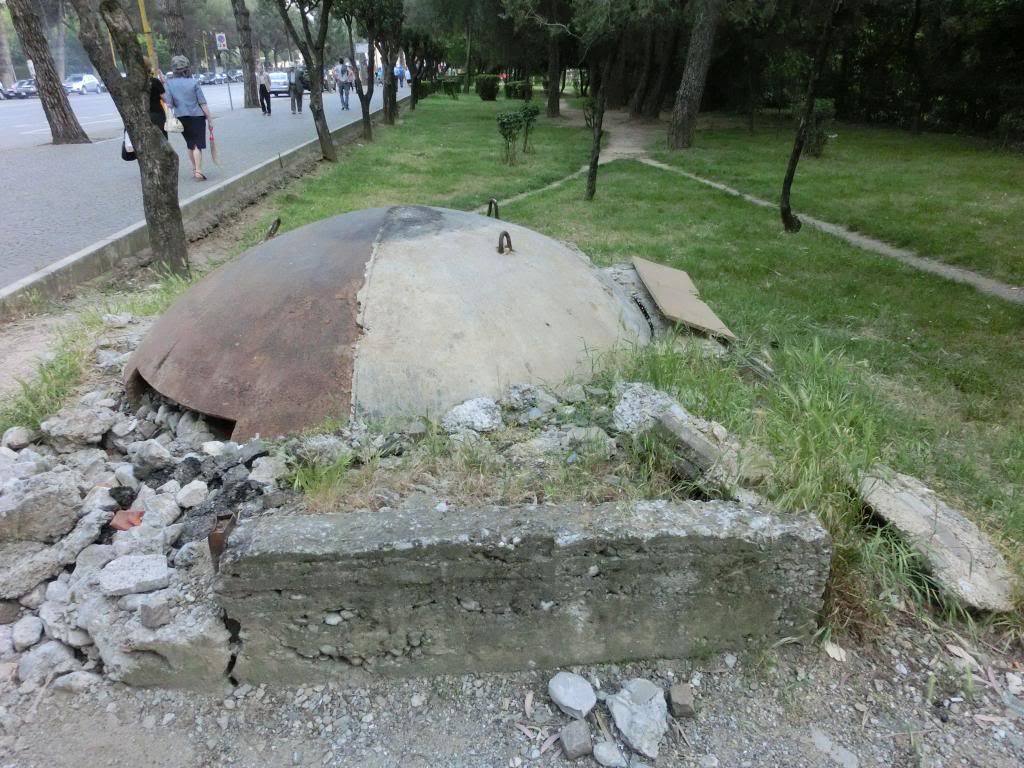 |
| old bomb shelter in tirana |
Sunday, June 23, 2013
Bohemian Rhapsody - Peru (D1-4)
I was delighted to find that one of the most economical ways to fly to Lima was to first get to Buenos Aires and then an onward flight from there. Never did I expect to return to one of my favorite cities (not a big city fan though) again so soon. I would stay for three nights in BA before jetting off to Lima and then return for another three more nights at the end of the trip. For my first visit, I opted to stay in Villa Crespo, a neighborhood adjacent to Soho Palermo as I wanted to spent more time exploring Palermo - a residential barrio of parks filled with pines, palms, and willows, where families picnic on weekends and couples stroll at sunset. One of its sub-barrios, Palermo Viejo is very popular among visitors for its bohemian vibe and trendy shops, cafes and restaurants. It was Labor Day and the Porteños went to the parks in droves and I had a field day people watching and photographing. Las Canitas is another interesting place not far from Palermo that I like. As in Palermo Viejo, some of buildings particularly the shops and restaurants are unique and artistic in design and fun for photography too. For me, no trip to BA is complete without eating at one of the parillas and one of the very best in town and my favorite is La Cabrera. The bife de lomo is marinated and grilled to perfection and when complimented by a glass of Malbec... just divine.
Arrived late at night in Lima and leaving the next day afternoon, I did not expect to do or see much of the city but the Barranco where I stayed was a surprisingly engaging neighborhood. Barranco is compact with its fine streets, small colonial squares and buildings, where one can still sense the old spirit of Lima. It is also home and working place of many of Peru's leading artists, musicians, designers and photographers. I was surprised not to see more tourists here. Most of the places of interests and popular restaurants are within walking distance. Lunched at Canta Rana, a popular local restaurant that served up amazing ceviche. I enjoyed a post lunch stroll around the iconic Bridge of Sighs built over a ravine in the middle of leafy trees and watched the world go by at the low key Municipal Plaza. Barranco is also home to several interesting free museums, art galleries and studios. I visited the Artesanos Don Bosco - a studio and showroom in a restored century-old building for handiwork of Andean village woodworkers. Lucia de la Puenta is another interesting but small art gallery around the corner. I stayed in a fabulous B&B that is a guesthouse, museum, art gallery and studio rolled into one. There are many intriguing art pieces on display in the garden and around the pool area and an art gallery with excellent view to the Pacific coast. Too bad I only stayed here for a night.
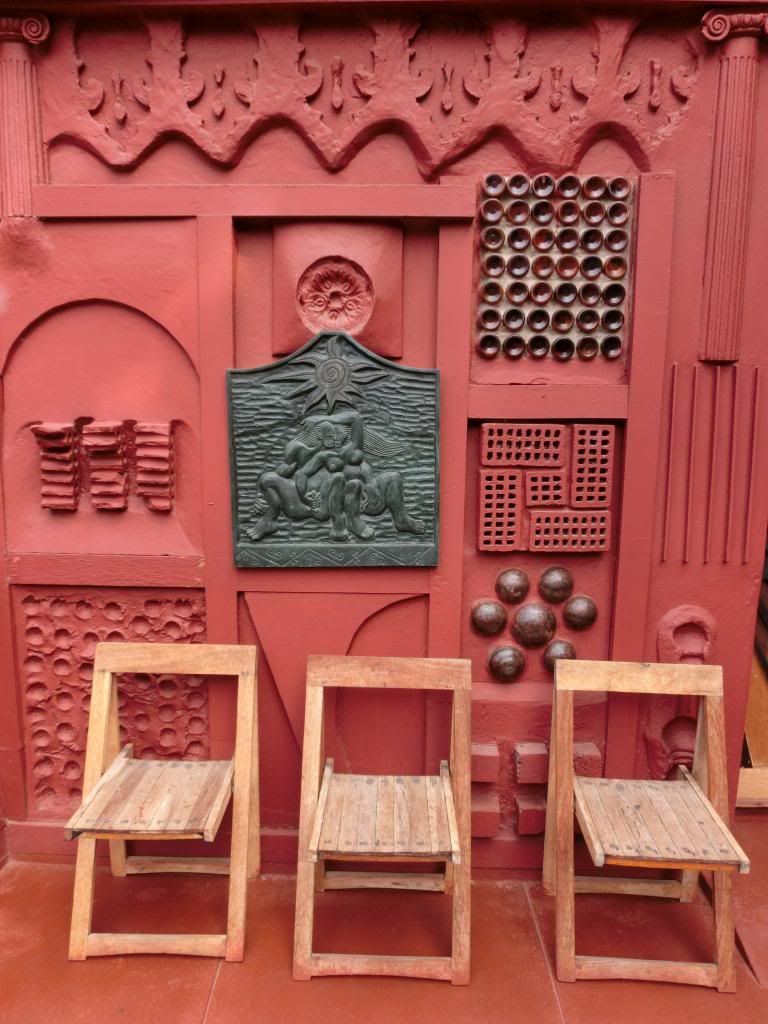 |
| erotica art in barranco b&b |
Saturday, April 27, 2013
Ruaha - East Africa (D5/6)
Pride of lions under a baobab - saw this fitting image to me of Ruaha within minutes of leaving the airstrip. I first heard about Ruaha National Park years ago from a wildlife film about lions here regularly hunting buffaloes during the dry season. The main reasons for taking on such formidable prey are the dispersal of smaller animals and the absence of wildebeest, a preferred prey of the lions. Over at Lake Manze camp the other evening, I overheard a guest likened Ruaha to 'a land of baobab'. Located in the middle of Tanzania, it is the largest national park in Tanzania covering an area of about 22,000 sq km. It is also uncrowded and despite its size, less than 8000 visit the park each year although the numbers are slowly increasing. We break for a fabulous picnic lunch at a rest point overlooking the dried out Mwagusi river bed. The river which is dry throughout most of the year and acts as a water source for all the surrounding game. It was a busy time of the day at Mwagusi - giraffes, banded mongoose, baboons and impalas were all present. After lunch, we game drove around the Mwagusi area a bit more before heading west to the camp. On the way, I felt a sharp stinging pain on my right arm and found out from my guide later that it was the tsetse flies. Although the human sleeping sickness transmitted by tsetses in this region has been eradicated, these vicious insects still deliver a painful bite and can be really annoying on game drives. Not too far from the camp, we found 2 male lions from the Mdonya pride. Unlike in Selous, off-road driving is actually prohibited here (NP rules) but the guides will readily ignore this rule so getting close to those lions here is still a possibility.

Woke up by hyenas (how often do I get to say that?) which sounded barely a few feet away from my tent early next morning. My tent was the furthest away from the main camp area and thus most likely to have wild animals wandering closer to it. After a leisurely breakfast, set off for a morning (0800) game drive. There was a family of bat-eared fox living near the camp. An adult pair and a pup that was curiously peeping from the burrow. Next, the Mdonya pride and this time more than 15 lions including several cubs, huddling around two bushes for shade. It was the biggest pride of lions that I have seen so far on safari. There were also sightings of some interesting birds like the beautiful lilac bellied roller and the majestic martial eagle. Ruaha is one of those few game parks that are residence to both the greater and lesser kudus. The rarer lesser kudus are extremely shy so trying to take a decent picture of them posed a real challenge. Other notable sighting included a small herd of buffaloes and game viewing was especially sparse on the way back to the camp. Once back in camp, the manager suggested that I have lunch at my tent veranda since no other guest would be back. When I got back to my tent, the table was all laid out and ready for lunch to be served. Nice touch and exceptional service. After lunch, did some reading and watching vervet monkeys playing on the old Mdonya river bed til my late afternoon game drive. The late afternoon drive was a short one (2 hrs) so we were not able to venture too far from the camp and I did not see much of anything. Oh and the tsetses were relentless...
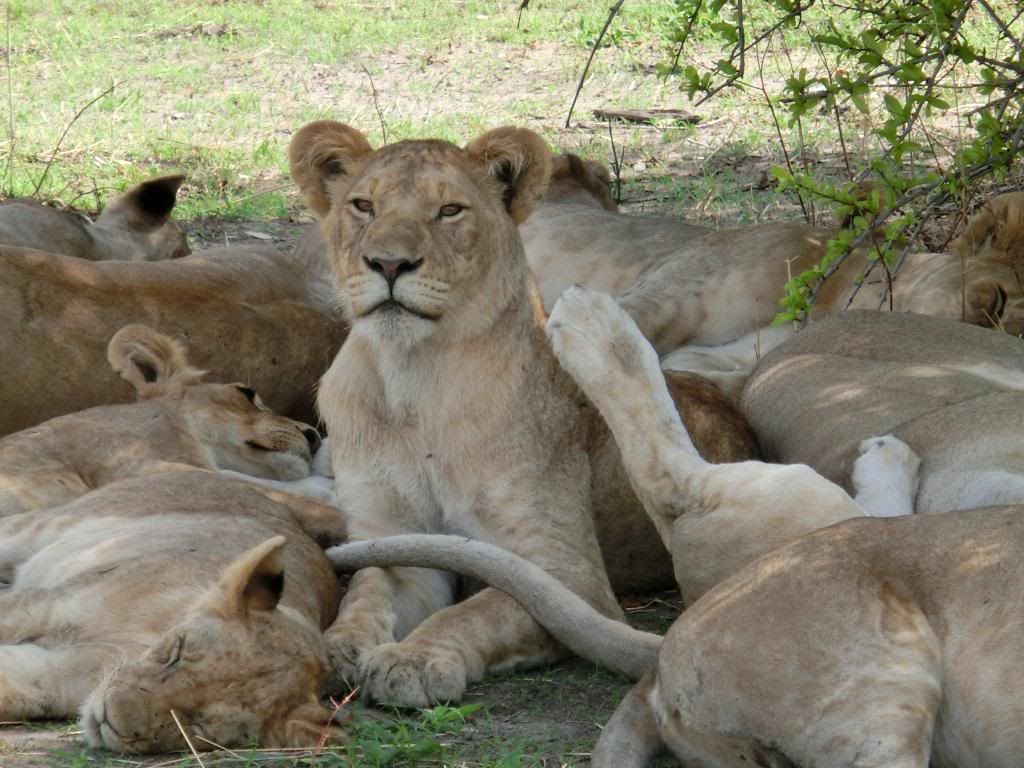 |
| mdonya pride in ruaha |
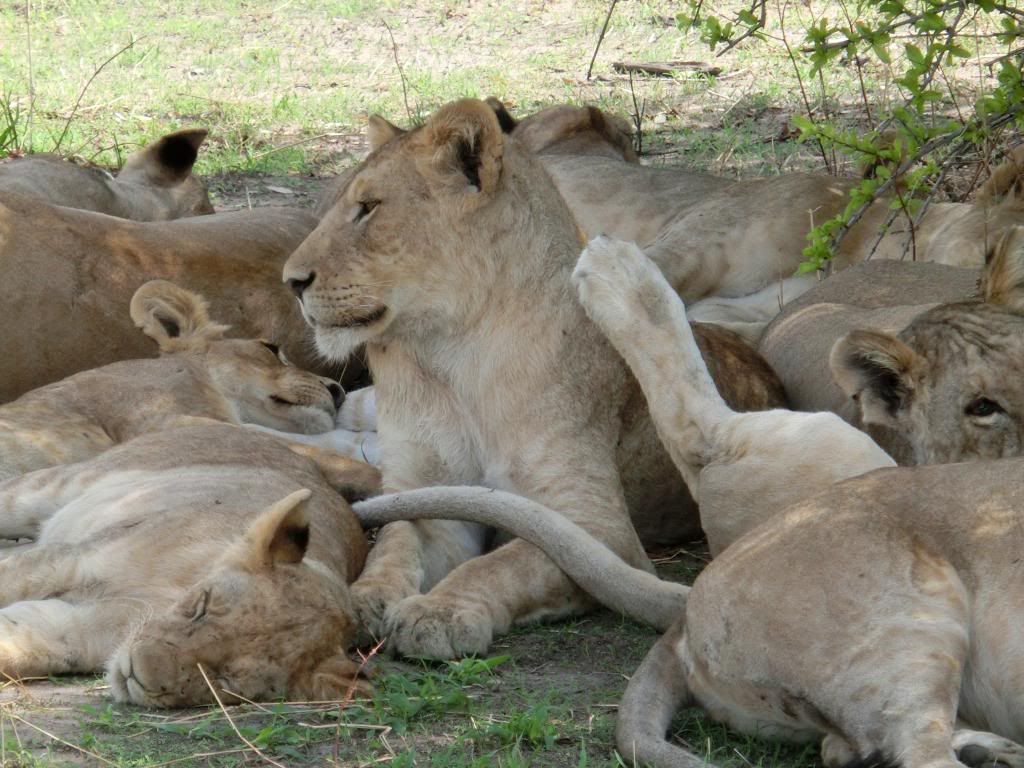
Woke up by hyenas (how often do I get to say that?) which sounded barely a few feet away from my tent early next morning. My tent was the furthest away from the main camp area and thus most likely to have wild animals wandering closer to it. After a leisurely breakfast, set off for a morning (0800) game drive. There was a family of bat-eared fox living near the camp. An adult pair and a pup that was curiously peeping from the burrow. Next, the Mdonya pride and this time more than 15 lions including several cubs, huddling around two bushes for shade. It was the biggest pride of lions that I have seen so far on safari. There were also sightings of some interesting birds like the beautiful lilac bellied roller and the majestic martial eagle. Ruaha is one of those few game parks that are residence to both the greater and lesser kudus. The rarer lesser kudus are extremely shy so trying to take a decent picture of them posed a real challenge. Other notable sighting included a small herd of buffaloes and game viewing was especially sparse on the way back to the camp. Once back in camp, the manager suggested that I have lunch at my tent veranda since no other guest would be back. When I got back to my tent, the table was all laid out and ready for lunch to be served. Nice touch and exceptional service. After lunch, did some reading and watching vervet monkeys playing on the old Mdonya river bed til my late afternoon game drive. The late afternoon drive was a short one (2 hrs) so we were not able to venture too far from the camp and I did not see much of anything. Oh and the tsetses were relentless...
Thursday, March 21, 2013
Dubrovnik vs Kotor - The Balkans (D11/12)
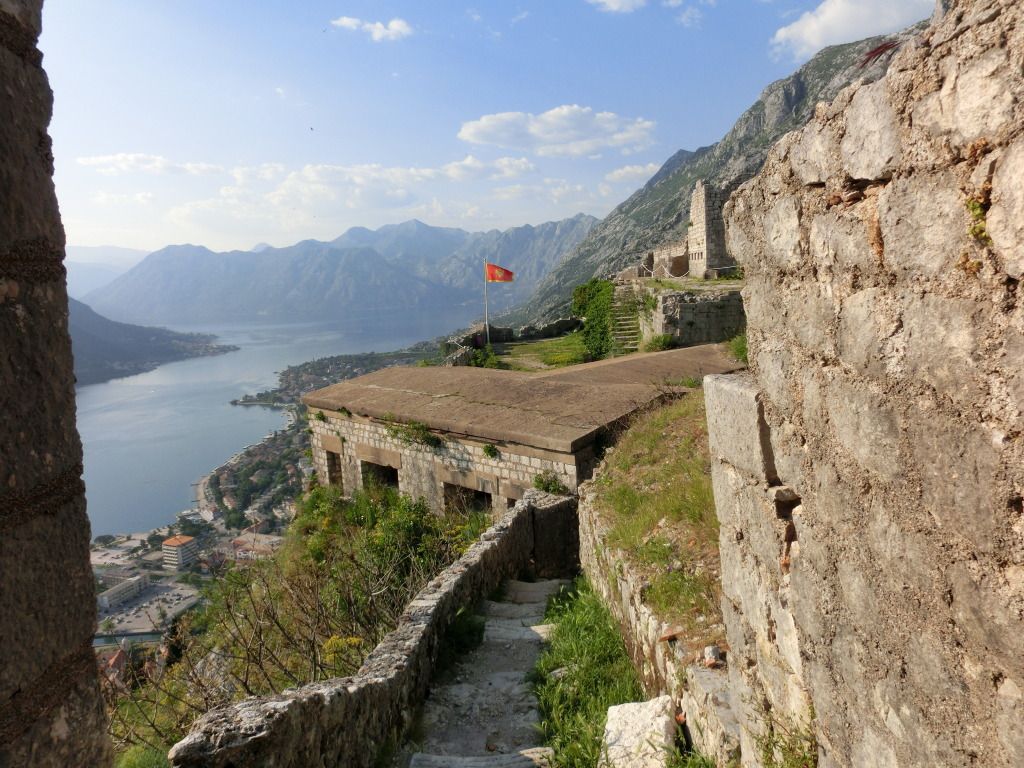 |
| view from the st john fortress in kotor |
Tuesday, February 12, 2013
An Inconvenient Storm - East Africa (D3/4)
Not long after we had left camp for a full day game drive, we saw a pride of lions - 2 adult females and 3 big cubs all resting under trees. We were game driving to Beho Beho hot springs on my third day in Selous. We passed a uniquely picturesque lake filled with birdlife and in the lake stood trees - dead trees. The trees died when the area became flooded but what I found intriguing was that they did not just rot away but remained standing. Just like if the Dead Vlei became flooded again. On we went and another pride of lions and this time 2 males and a female. Unlike in Etosha and Kruger, off-road driving is allowed here so we were able to get really close to the lions although other more skittish animals will simply run away. It seemed like the heat was getting to the lions especially the big males as they panted heavily even when inactive. The manes on the males were also noticeably thinner and that might have something to do with the climate as well. The guide located a kill (wildebeest) hidden in the bush not far away from the lions. As we drove toward Beho Beho, the concentration of game quickly dried up and for a while, even the impalas went missing. Then we arrived at Lake Tagalala, a bird paradise with Marabou Storks, White Pelicans, Pied Kingfisher and others. Along the shore, crocodiles were rushing into the lake to join the hippos as our jeep approached them. We stopped for a picnic lunch in this wild setting - just us with no other vehicle in sight by the lake. What a moment in safari... After lunch, we left Lake Tagalala and drove to the hot spring at the foot of Beho Beho. Apparently I had chosen to visit the hot spring on the hottest day in recent times but I would not leave without taking a dip. It felt lukewarm but the water from the small falls was a bit warmer. My guide and driver joined me in the hot spring for an enjoyable but quick dip. This area in Selous is really isolated and in fact we had not met another vehicle since we left the lions sighting in the morning. On the way back to camp, I was lucky enough to witness the most amazing spectacle of large flocks of Red-Billed Quelea while passing an open area. They formed dark fast moving clouds and dodging and weaving around trees, appeared upwards off the ground as if from nowhere.

'Let's go that way,' our guide pointed to the direction of the hyenas. I thought that was an absurd thing to do in a game walk. We had earlier seen several hyenas about 300 meters away and they disappeared behind the bush. Game walks can be really interesting and this morning, I picked up on the characteristic of various animals (giraffe, elephant and hyena) dung, footprints (hippo) and smaller animals and insects (buffalo weaver and lion ant). And thankfully we did not run into those hyenas again for the rest of the walk. The early morning game walk ended quite early so the camp manager had arranged for me to do a short game drive after breakfast. Here in Lake Manze Camp, they are really accommodating and flexible about the activities and the quality of food, service and accommodation have far exceeded my expectations. Because it was not the peak season, I was given exclusive use of the vehicle for two days. The late morning game drive however was a shared drive but it was nice to have others around too. First notable encounter was 2 hyenas sleeping under some fallen trees. All of a sudden, one of them ran out and we followed it and saw it chewing on an impala leg behind a tree before running away. I kind of prefer watching hyenas from the safety of a vehicle. We drove around some more without seeing much until we found vultures feeding on an impala carcass. The carcass looked fresh and it probably died of natural causes. Back at the camp, I was game watching from my tent porch after lunch when I noticed dark clouds ominously appearing. It was supposed to be the beginning of the wet season but the for the past two days, the weather had been great. But now a storm was brewing as I eagerly awaited for the final game viewing activity in Selous. I was saving the sunset motorboat safari not only because it was the most popular activity but also the National Parks that I was going to after that did not have boat/river activity. On the way to the nearby starting point, it began to pour and it was absolutely torrential. I was quickly drenched at the back of the open sided safari vehicle. When we got there, I thought the boatman was going to call it off but he waved me over instead. I was putting on the raincoat handed to me in the boat when we were devastated by a strongest gust of wind imaginable, smashing tree branches, pebbles, sand and other debris at us and only the rope tied to a tree kept us by the river bank. End of my motorboat safari.

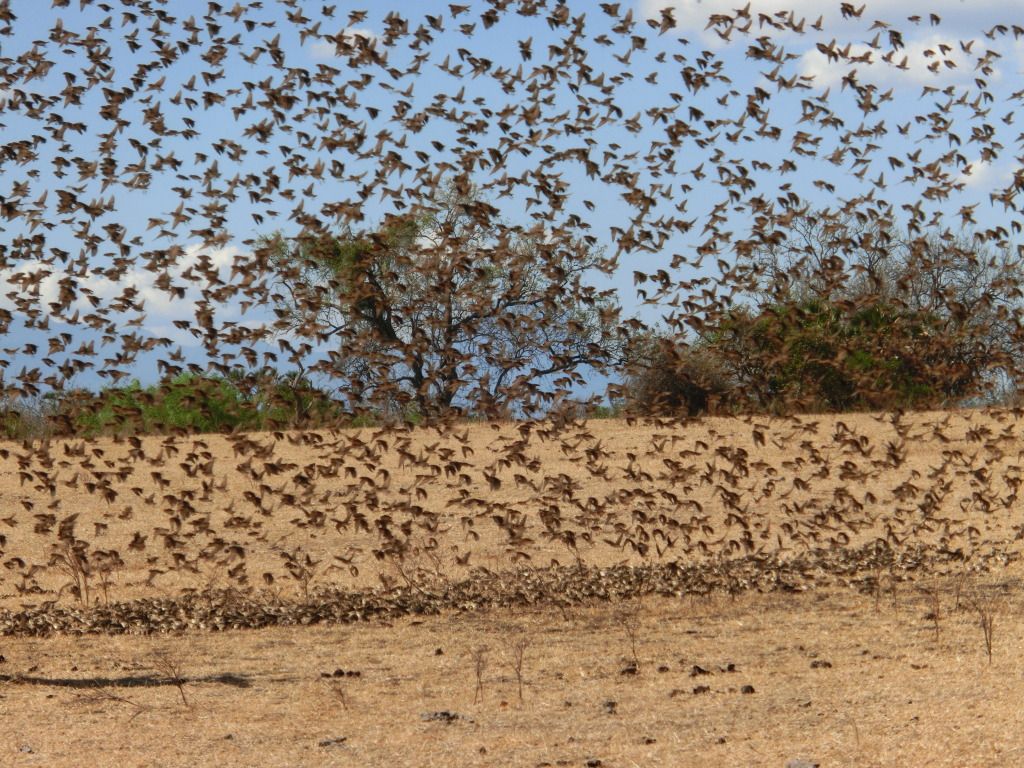 |
| nature marvel - flock of red-billed quelea |
Saturday, January 5, 2013
Got Gregada? - The Balkans (D8/9/10)
Back to Split again for a catarmaran connection to Hvar. There was enough time for something that I did not get to do during the first visit - climb up the Cathedral of Saint Domnius. It is the tallest structure as far as I could see and offers a glorious unobstructed 360 view of the city. Hvar has long been one of the most popular Croatian Islands. Hvar Town is one of the Adriatic's most bewitching and best preserved historic towns. Starting from the grid of narrow lanes of Old Town known as Groda, I gradually worked my way up the slopes to the Citadel or Spanjola as the locals called it. There is a marine archaeology collection and a former prison among the halls, although the real attraction is the view from the Citadel's ramparts. The mostly intact defensive wall plunge down the hillside towards the terracotta roofs of Hvar Town below, while beyond stretch the Pakleni islands just offshore. Dinner was the local delight gregada - a stew of fish cooked in white wine and a Hvar specialty - in an old town restaurant. Day two in Hvar Town began with light breakfast and idle stroll along the waterfront to the Franciscan Monastery at the south end. In an unplanned move, I hired a taxi boat along the marina to take me to the Pakleni islands. The boatman recommended the Palmizana beach - a popular excursion destination of Hvar visitors. The beach is located in a beautiful bay, covered with pebbles and has rocky parts and at the back of which there is a pine tree forest. I found a nice quiet restaurant hidden among the pine trees that served up a mean gregada with scampi - just what I was craving for.
Some say that Korčula is very much like Hvar. But the thing is that after visiting several Dalmatian towns, most if not all will start to appear and feel somewhat similar. It was getting dark when the catarmaran arrived in Korčula and by then I was already used to looking out for those ladies with rooms to rent out waiting at the harbor and bus station. They can be a good source of accommodation for anyone who is traveling during the low and shoulder season in this part of the world. It is easy, safe, convenient and much more affordable and better value than the overpriced hotels. There was also a feel good factor since I knew that I would be contributing directly to the local economy and community. I got another comfortable bargain room just paces from the old town wall. Next morning I woke up to the sound of the distant church bell ringing. Korcula Town sits on an oval hump of land, a medieval walled city with a series of narrow streets that branch off the main thoroughfare. I spent the day, exploring the old town with an invigorating siesta back at my room in between. Korčula may be much like Hvar but one thing that was sorely missed here was the gregada.
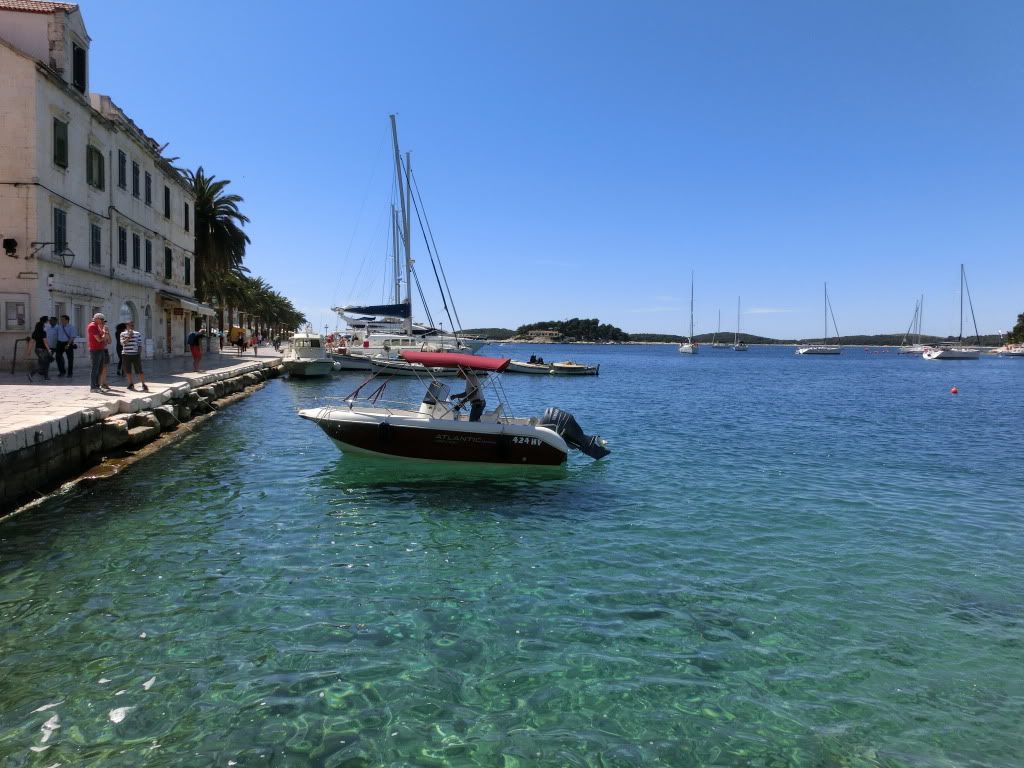 |
| my ride to the pakleni islands |
Saturday, December 8, 2012
Selous - East Africa (D1/2)
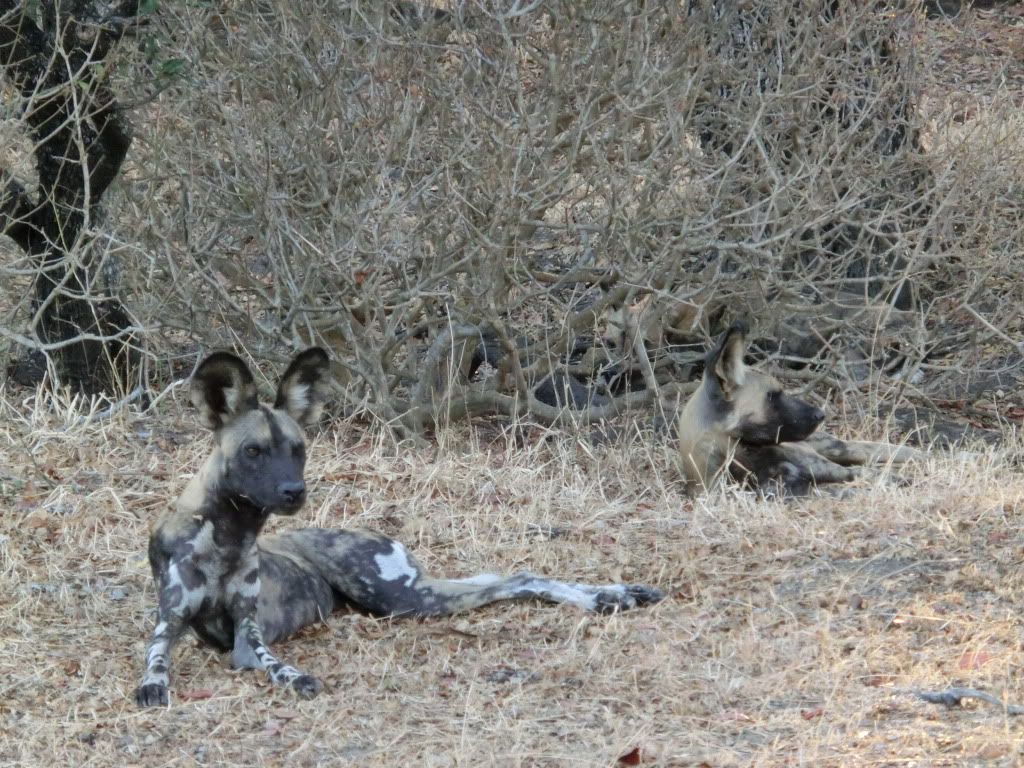
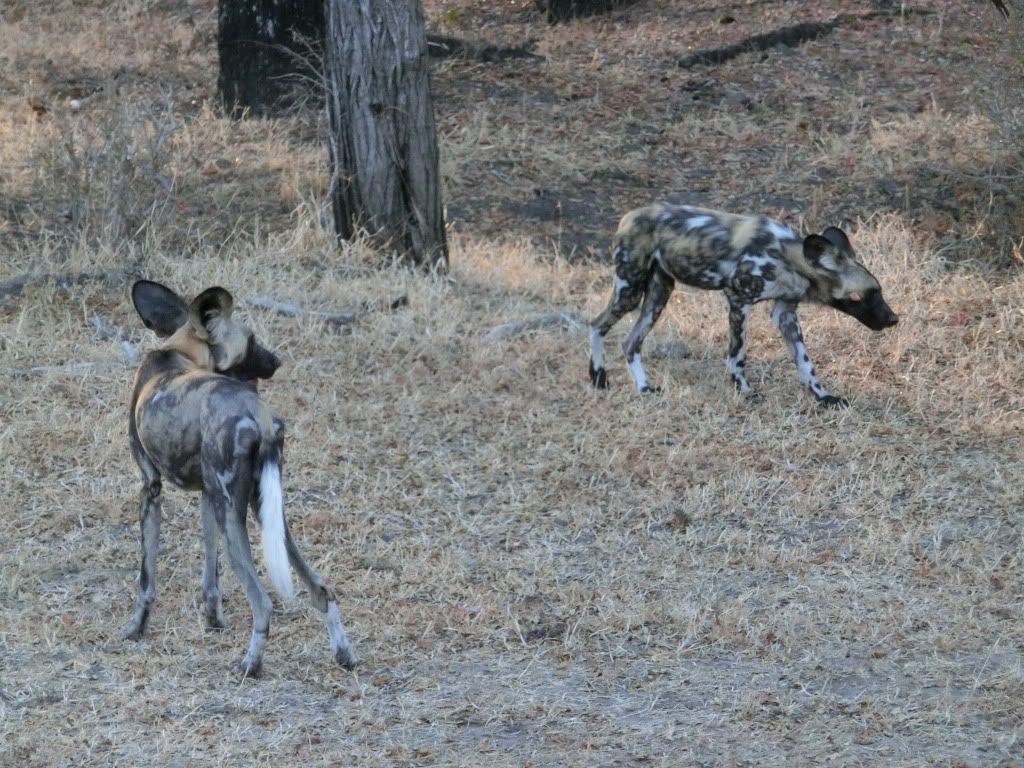
The familiar scent of game parks greeted me as I took a deep breathe while settling in on the jeep that was waiting for me at the airstrip. No matter it took 20 hours - including a grueling 4 hour plus wait at the tiny Dar Es Salaam safari airport and a light aircraft flight from there into the reserve - of travel time to the Selous Game Reserve, when the guide asked if I would like to do a game drive before heading back to camp, I enthused, 'Absolutely!' Covering a staggering 55,000 sq km, the Selous Game Reserve in southern Tanzania is one of the largest game reserves of the world. Most of the reserve remains set aside for game hunting and only a section of the northern park along the Rufiji River has been designated a safari activity zone. Spotting several giraffes near the airstrip, the guide told me that prior to my flight landing, they had to chase them off the airstrip to prevent an accident. Now that is what I call great personalized service. And before I could contain my excitement of finally being there and doing the first game drive (a favorite activity of mine) in 3 years, I saw the one animal that I wished to see most here in Selous - the critically endangered African wild dog or hunting dog. There were once approximately 500,000 African wild dogs and packs of 100 or more were not uncommon. Today there may be as few as 4,000 and they are primarily found in eastern and southern Africa, mostly in the two remaining large populations found here in Selous and the Okavango Delta in northern Botswana. There were several pups resting around the trees and a couple of adult dogs (probably 'baby sitters' as the rest could be out hunting) nearby... top of my wishlist checked, this was shaping up to be a great safari trip.

The motorboat safari in Lake Manze is excellent for birding and getting up close to some animals like the hippos and crocodiles and it can also add variation to the game viewing activities. My late morning boat safari brought me my first sightings of birds like the Egyptian geese, intermediate egret and many more than I could remember. The lake side was teeming with animals like waterbucks, buffaloes, giraffes and elephants while the two most abundantly animals seen in the lake were crocodiles and hippos. The crocodiles were mostly small to medium sized (rarely longer than 2m) and I reckoned the hippos posed a greater threat with plenty of them appearing larger and heavier than the motor boat. Our boat glided pass barely two meters from a group of hippos as my boatman gave me a somewhat reassuring smile. What the hell was this guy doing! But there were just so many hippos in the lake and I began to loosen up after several more close encounters with these big fellas. I thought the exhilarating boat safari was hard to beat but the afternoon game drive was quite amazing too though in a different way. Late on in the game drive, it started with just two adolescent lions - a male and a female walking pass our stationary jeep, then out of nowhere another appeared and then another and soon there were 6 or 7 of them. We followed them to a waterhole and observed closely lions social behavior - drinking, playing (among the adolescences) and greeting one another by rubbing their cheeks and necks together. There were about eight in total, at least three of which were adolescent male. I have no idea how long we stayed to watch them for and we left as the sun set and one by one the lions moved away into the bush. On the way back to camp, we saw the same pack of African wild dogs from the day before. Again only the pups and a couple of 'baby sitters' were there and I noticed one of them was limping slightly. It was a moment to savor, knowing that this could be the last time I see them again on this trip.... as it turned out it was.
 |
| african wild dogs or hunting dogs |
Wednesday, September 26, 2012
Retreat to Vis - The Balkans (D6/7)
I like a change of pace as I travel so I would, where possible, include some less-trodden or low-key places and while in the Balkans, that retreat came in the shape of the island of Vis. The furthest of the main central Dalmatian island from the coast, Vis served as a military base and was closed to visitors until 1989. The isolation preserved the island from development and drove much of the population away, leaving it underpopulated for many years. I rented an apartment from a lady who meet newly arrivals at the port. It was a great place at a great price - a minute walk from the port, adequately equipped and furnished and a spacious balcony with a splendid sea, port and Vis town view. It was easily my favorite accommodation choice of the trip. I spent the rest of the afternoon lazing off a nearby beach. The water was still cold but that did not stop me from taking quick dips. That evening, I walked along the scenic harbor side promenade to Kut for dinner. It seemed like everyone recommended this restaurant but I found it to a bit pricey and the portion small. The quality of the service and food was good though. I had the grilled squid, scorpion fish and local white wine.
After a hearty buffet breakfast at what seemed to me like the only hotel in Vis Town, I paid another visit to the medieval neighborhood of Kut. I did not linger for long as I had arranged for a car with driver for a late morning pickup to travel to various parts of the island. First stop was the town of Komiža on the western coast. Komiža is a small pleasant fishing town on a bay with a bohemian feel about it. We drove up to the hills for a stupendous view of Komiža and the coastline before heading off to the beach. It would be a shame to leave Vis without visiting one of its fabulous beaches and there are actually quite a few to choose from. My choice was the Srebrna or silver beach situated on the south-eastern side of the island. Srebrna is an astoundingly beautiful pebble beach with unusual, large pebbles that glare under the sun. It was nice and quiet, the way that I like it but the water was too cold for a swim. A short stay later, it was off to lunch at a konoba that specializes in peka cooking about 4 km outside Vis town. Peka is a cast-iron dome, placed over coals, which they use to slow-roast octopus (or kid lamb). It comes with potatoes, optionally carrot is added. My pre-ordered peka octopus was so tender and stickily caramelized melting in the mouth... divine. Back in Vis town in the mid afternoon and decided that it would be a great idea to walk off the incredible meal to nearby George III Fortress. After some uphill walking, I realized that I had missed the turn to the fortress and ended up at the rogacica instead. To get to the ruins, there was a thorny scrubs covered slope to overcome but the view was certainly worth all the nicks on the shins and effort.
 |
| peka octopus - simply the best |
Saturday, August 11, 2012
A Tale of Two Cities - The Balkans (D4/5/6)
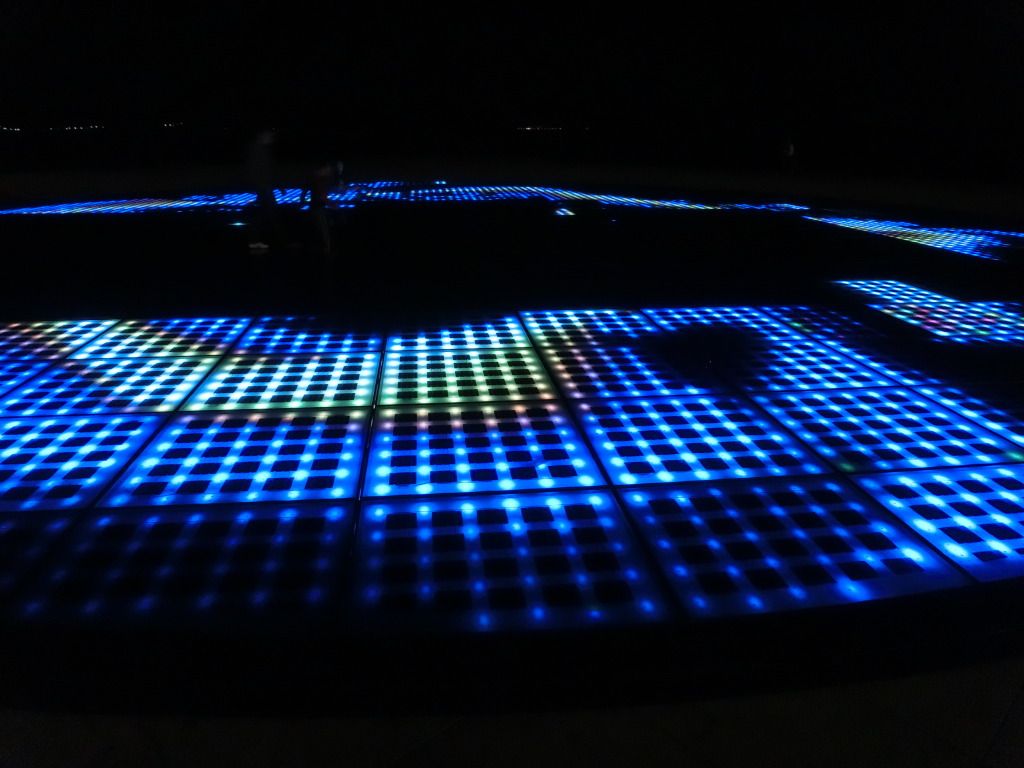
In the historic town of Zadar, I found myself in a dormitory full of strangers. A hostel dorm is not my top choice of accommodation these days but a combination of events and the lack of other options in the old town led to this. It was another late arrival and upon freshening up, it was time for dinner and I had an excellent seafood platter and local white wine at a konoba (local eatery). After the best meal of the trip so far, I walked it off to the harbor front to see and hear two unique features of Zadar - the Sea Organ and Sun Salutation. The incredible Sea Organ, designed by local architect Nikola Bašić, is an ingenious idea. It is set within the perforated stone stairs that descend into the sea with a system of pipes and whistles that exudes wistful sighs when the movement of sea pushes air through it. The result is hypnotic tones increasing in volume when a boat or ferry passes by. Right next to it is the Sun Salutation, another wonderful wacky Bašić creation. It is a 22m circle solar energy system that cut into the pavement and together with the wave energy that makes the Sea Organ's sound, produce a psychedelic light show from sunset to sunrise that is meant to simulate the solar system. The old town is just filled with Roman remains and some can be found in rather unexpected places. It is interesting how some of them have blended into the new buildings and environment. My favorite feature is when the ruins are actually functional, like how an old Roman wall with a gate added to it, is used to seal off a property.
As with most travelers to the southern Dalmatia, I used Split as a transportation base and at first did not think of it as an attraction per se. That notion changed shortly after I arrived. I got a nice room from a lady at the bus station and as we were walking back to her property along the busy Diocletian Palace waterfront, I immediately felt the exuberance mood of the city. That evening, a local folk dance, music and song performance was staged at the waterfront. Apparently, I had stumbled upon a regional celebration or event that I did not know about and it was fun and entertaining. Within the palace walls, a bar creatively turned the open courtyard next to the Diocletian Mausoleum and Sveti Duje Cathedral into a cool open air music lounge complete with candles, cushions and live music performance. The sound of opera singing led me to yet another fine performance a few twists and turns along an alley away. Like the old town Zadar, I find it intriguing the way section of the remains of Diocletian Palace appeared side by side with the new buildings. Some of the buildings are simply built fused to the ruins so you get a mixed of something old and something new within a complex.
 |
| psychedelic light show |
Subscribe to:
Posts (Atom)
